
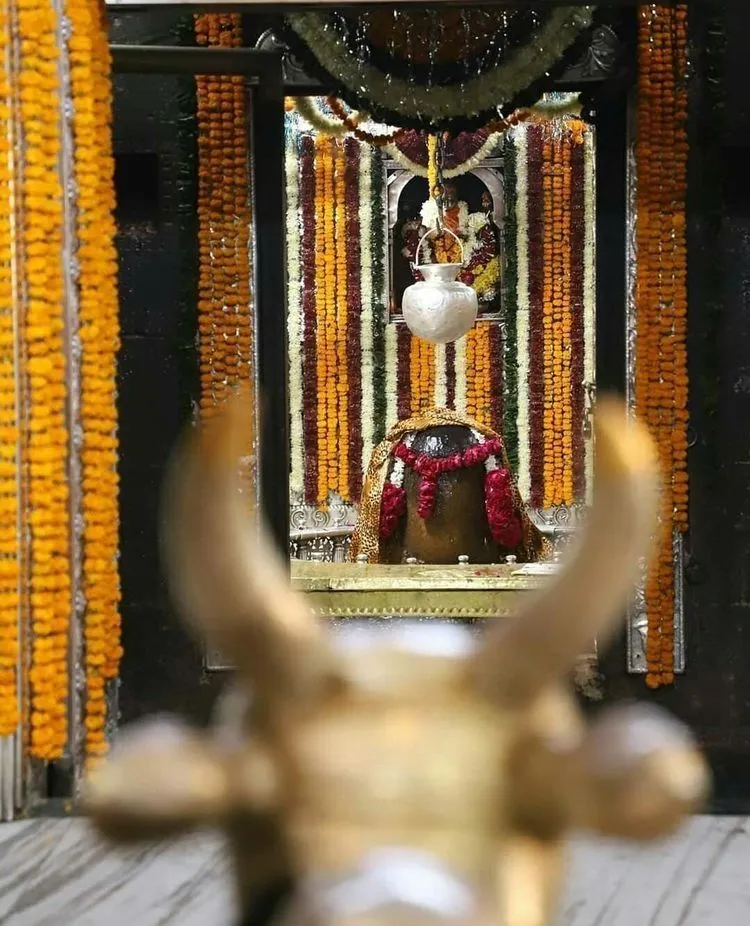

Key takeaways
- One of Shiva's 12 Jyotirlingas and the only south-facing (Dakshinamukhi) one.
- General darshan is free; Sheeghra/VIP about Rs250 and the Bhasma Aarti pass about Rs200 (as of Oct 2026).
- Bhasma Aarti runs ~4:00-6:00 AM and the pass is online-only via the official portal.
- The Garbh Grah sanctum is closed to the general public; no standard touch-the-lingam ticket.
- Nearest airport is Indore (~55 km); Ujjain Junction is ~2 km from the temple.
Mahakaleshwar Temple Ujjain is one of Shiva’s 12 Jyotirlingas and the only south-facing (Dakshinamukhi) one, set beside the Shipra River in Madhya Pradesh. This guide covers the temple’s history and significance, darshan timings, 2026 entry options and fees, how to reach Ujjain, and what to see nearby. We are an independent local guide and do not sell tickets.
Booking for paid darshan and Bhasma Aarti happens only on the official portal, the official Mahakaleshwar temple portal. Treat any other site asking for payment as a scam.
Why Mahakaleshwar Temple Ujjain is so revered
The mahakaleshwar jyotirlinga is counted among the twelve Jyotirlingas of Shiva, the shrines where the deity is worshipped as a pillar of light. Pilgrims travel here from across India because of what the lingam is believed to represent: Mahakal, the lord of time and death.
One of the 12 Jyotirlingas
Of all twelve Jyotirlinga sites, the shri mahakaleshwar jyotirlinga temple holds a special place in scripture and pilgrimage circuits. Ujjain itself was an ancient seat of learning and astronomy, which adds to the temple’s standing. For centuries, Ujjain was treated as the city through which the prime meridian of Hindu geography passed, which is partly why the lord of time is worshipped here.
The only south-facing (Dakshinamukhi) Jyotirlinga
The lingam faces south, which is rare. This Dakshinamukhi placement is tied to Mahakal’s role over death and is believed to give the shrine its protective power over the city. No other Jyotirlinga shares this feature, and it is one of the reasons devotees single out Mahakaleshwar for rituals meant to ward off untimely death and ill fortune.
A swayambhu lingam and “Mukti Sthal”
The lingam is held to be swayambhu, or self-manifested, rather than installed by hand. Ujjain is also called a Mukti Sthal, a place of liberation, which is why last rites and ancestral rituals are common here. Many families combine a darshan with a pind daan or a visit to the Shipra ghats as part of the same trip.
History of the temple
The temple’s story stretches back many centuries, with waves of destruction and rebuilding. Older accounts place references to the shrine well before the common era, and medieval rulers such as Udayaditya and Naravarman are linked to reconstructions around the 12th century.
Destruction and later attacks
Historical records note that the temple was destroyed by Iltutmish during a raid in 1234-35. It was later targeted again in the campaigns of Jalaluddin and Alauddin Khalji. For long stretches the site survived in a reduced form.
The 18th-century Maratha rebuilding
The structure visitors see today owes much to the 18th-century Maratha period. The reconstruction is associated with Ranoji Shinde and his administrator Diwan Ramachandra Sukthankar. The present spire, courtyards and the layout around the underground sanctum largely date from these Maratha-era works and the additions made since. The poet Mahakavi Kalidasa, who lived in ancient Ujjain, wrote of the city’s temples long before this, a reminder of how old the site’s sacred reputation is.
Temple structure and the five-storey shrine
The mahakaleshwar temple is built on five levels. The main shrine sits underground, which gives the sanctum its distinctive, cave-like feel during darshan.
The underground sanctum (Garbh Grah)
The lingam is housed in the Garbh Grah, the innermost sanctum on the lowest level. Devotees view it from the designated darshan path rather than from inside the chamber. The underground setting keeps the sanctum cool and dim, and the flow of the queue is managed closely so that everyone gets a clear view as they pass.
Nagchandreshwar on the third storey
On the third storey is the Nagchandreshwar shrine. It opens for darshan only once a year, on Nag Panchami, so most visitors will see its doors closed. Nag Panchami next falls in early-to-mid August 2027.
Darshan timings and Bhasma Aarti (as of October 2026)
The temple keeps long hours and does not close in the afternoon. For a full step-by-step plan of gates, queues and passes, see our Mahakal darshan guide.
Daily darshan hours
General darshan runs roughly 4:00 AM to 11:00 PM. During the peak Shravan (Sawan) and Bhadon months the temple can open earlier, around 3:00 AM, to handle larger crowds. Treat the earlier start as seasonal, not the year-round norm. On a normal weekday, a free general darshan takes anywhere from forty minutes to a couple of hours depending on the queue at the entry gates; on Mondays and festival days that can stretch much longer, so an early start helps.
Bhasma Aarti and other aartis
The Bhasma Aarti is the temple’s signature ritual, held in the early morning window of about 4:00 AM to 6:00 AM. Sacred ash, now prepared from cow dung, is offered to the lingam. Entry needs a pre-booked pass. The evening Sandhya Aarti and the night Shayan Aarti are the other main ceremonies. If you want the pass, read how to book Bhasma Aarti online before you travel.
Entry options and current 2026 fees
General darshan is free. Paid options speed up the wait or cover a specific aarti. Every figure below is approximate and dated; confirm it on the official portal before you pay. All prices are shown in Indian rupees (Rs).
| Darshan / aarti type | Fee (per person) | Timing | How to get it |
|---|---|---|---|
| General (Chalit) darshan | Free | 4:00 AM – 11:00 PM | Join the queue at the temple |
| Sheeghra / VIP darshan | approximately Rs250 (as of Oct 2026) | Daytime | Official portal; see VIP / Sheeghra darshan ticket price |
| Bhasma Aarti pass | approximately Rs200 (as of Oct 2026) | 4:00 AM – 6:00 AM | Official portal only; book about 1 month ahead, plus a Tatkal quota |
| Sandhya / Shayan Aarti (seated) | approximately Rs250 (as of Oct 2026) | Evening / night | Official portal |
| Garbh Grah (sanctum) | No public ticket | n/a | Closed to the general public |
Bhasma Aarti pass: online only
The Bhasma Aarti pass is sold online only, through the official portal, with the booking window opening roughly a month before the date and a limited Tatkal quota closer to the day. Ignore any claim of a 60-day window or a Rs1,500-plus pass.
General vs Sheeghra darshan
If you are short on time, Sheeghra (VIP) darshan at the mahakal temple ujjain shortens the queue for a small fee. If you have time and patience, free general darshan is perfectly fine.
Can you enter the sanctum or touch the lingam?
This is where many pages mislead visitors. The honest answer: the Garbh Grah is not open to the general public, and there is no standard ticket that lets ordinary visitors walk in and touch the lingam. Darshan is from the viewing path.
A paid jalabhishek-style access tier existed in the past but is not a reliable public option now. Reportedly, in early 2026 the Supreme Court declined to interfere with how the temple manages special VIP or sanctum access, treating ritual and entry rules as the temple’s own matter. Treat that only as background; what matters for your visit is that sanctum entry is restricted, so verify current rules on the official portal.
In practice, this means you should be wary of touts near the gates who promise “direct sanctum entry” or a special touch of the lingam for cash. During the busy Sawan season in particular, offers like these are common and unreliable. Stick to the official portal and the published darshan path, and you will not be caught out.
How to reach Mahakaleshwar Temple, Ujjain
Ujjain is well connected by train and road, with the nearest airport in Indore. The temple sits close to the city centre and the railway station.
| Mode | Nearest point | Approx. distance / time to temple |
|---|---|---|
| Air | Devi Ahilya Bai Holkar Airport, Indore | ~55 km (about 1.5-2 hours by road) |
| Train | Ujjain Junction | ~2 km |
| Road | Ujjain city bus stand / local taxis and autos | Within the city |
By air, train and road
Fly into Indore’s airport and take a taxi or bus for the roughly 55 km run to Ujjain. By rail, Ujjain Junction is about 2 km from the temple, a short auto ride away. Within the city, autos and taxis reach the temple gates easily, though vehicles are held back from the immediate complex on busy days.
Best time to visit, dress code and festivals
The ujjain mahakaleshwar temple draws crowds year-round, but some periods are far busier than others. Planning around them makes a big difference to your wait.
Best time and crowd seasons
The holy month of Sawan (Shravan) and the festival of Mahashivratri bring the heaviest crowds. Mornings are busy for the Bhasma Aarti; late evenings are usually calmer. Mahashivratri next falls in early March 2027. If your dates are flexible, a weekday outside the monsoon festival season gives you the easiest darshan, and the cooler months from October to February are the most comfortable for walking the complex.
Dress code and security
Dress modestly, covering shoulders and knees, as befits an active temple. Security checks are routine, and phones, cameras and large bags may be restricted near the sanctum, so carry as little as possible. There are cloakroom and locker facilities near the complex where you can leave belongings before you join the queue, which speeds up the security check at the gate.
Major festivals
Mahashivratri is the temple’s biggest night. Sawan Mondays see huge processions. Ujjain also hosts the Simhastha (Kumbh Mela) once every twelve years, when the city fills with pilgrims bathing in the Shipra.
What to see in the temple complex and nearby
A visit to the temple pairs naturally with the surrounding sites, most of them within walking distance.
Mahakal Lok corridor
The Mahakal Lok corridor, a roughly 900-metre landscaped walkway lined with statues and murals from Shiva lore, opened in 2022 and is now the main approach to the temple. It is worth arriving early to walk it unhurried. The corridor has lotus ponds, carved columns and night lighting, and for many families it has become a destination in its own right rather than just the route in. Expect to spend half an hour here before you even reach the darshan queue.
Shipra ghats and nearby shrines
The Shipra (Kshipra) River ghats, the once-a-year Nagchandreshwar shrine and several other Ujjain temples are all close by. Planning a visit over a full day lets you see them without rushing. To map it all out, download our free Ujjain visit planner.
A note on booking and trust
Always book Bhasma Aarti and paid darshan only on the official portal, shrimahakaleshwar.mp.gov.in. We are an independent local guide: we help you plan and we point you to the official source, but we do not sell tickets or take payments. For official timings and travel notes you can also check MP Tourism.
Frequently Asked Questions
Why is Mahakaleshwar one of the 12 Jyotirlingas?
Mahakaleshwar is counted among the twelve Jyotirlingas, the sacred sites where Shiva is worshipped as a pillar of light. Its lingam is revered as Mahakal, the lord of time and death. Ancient Ujjain’s standing as a seat of learning and pilgrimage adds to the shrine’s importance across India.
Why is Mahakaleshwar the only south-facing Jyotirlinga?
Its lingam faces south, a placement called Dakshinamukhi that is unique among the twelve Jyotirlingas. In tradition the south is linked with death and time, matching Mahakal’s role, and the orientation is believed to give the shrine its protective power over Ujjain. No other Jyotirlinga shares this feature.
What are the darshan timings at Mahakaleshwar Temple?
General darshan usually runs from about 4:00 AM to 11:00 PM, with no afternoon closure. During the peak Shravan and Bhadon months the temple may open earlier, around 3:00 AM, to manage crowds. Treat the earlier start as seasonal and confirm current timings on the official portal before you travel.
How much does darshan or Bhasma Aarti cost at Mahakaleshwar?
General darshan is free. Sheeghra or VIP darshan costs about Rs250 per person and the Bhasma Aarti pass about Rs200 per person, as of October 2026. Figures are approximate and change, so verify them on the official portal. Ignore any site quoting much higher multi-tier Bhasma fees.
Can you enter the sanctum or touch the lingam?
No. The Garbh Grah sanctum is not open to the general public, and there is no standard ticket that lets ordinary visitors enter and touch the lingam. Darshan is taken from the viewing path. Reportedly a 2026 court matter left special-access rules to the temple, so check the official portal for current policy.
How do I reach Mahakaleshwar Temple from Indore airport or by train?
The nearest airport is Devi Ahilya Bai Holkar Airport in Indore, about 55 km away, roughly 1.5 to 2 hours by road. By train, Ujjain Junction is about 2 km from the temple, a short auto ride. Within the city, taxis and autos reach the temple gates easily.