

Written by Kshitij Kumawat · Ujjain local, documenting Mahakaleshwar since 2018
Independent guide — kept up to date and verified against the official temple portal www.shrimahakaleshwar.mp.gov.in
Key Highlights: No King Can Sleep in Ujjain at Night
- Mahakaleshwar Temple: Ujjain, MP. One of 12 Jyotirlingas. Open 3 AM to 11 PM daily.
- Bhasma Aarti: 4 AM daily ash-anointing ritual. Paid pass 1,500 to 3,000 rupees.
- Booking: Only on official www.shrimahakaleshwar.mp.gov.in. 60-day advance window.
- Disclaimer: We do not facilitate bookings. Beware of fake agents charging extra.
There is a rule in Ujjain that has existed for over two thousand years.
No king. No emperor. No ruler. No politician. Nobody who holds power over other humans is allowed to spend the night inside Ujjain city limits.
This isn’t a legend passed down by grandmothers. It is a documented historical tradition — one that Mughal rulers acknowledged, that Maratha kings strictly followed, and that even British colonial officers reportedly respected during their time in India.
The reason? In Ujjain, there is only one king. And he has held that throne for longer than any dynasty in human history.
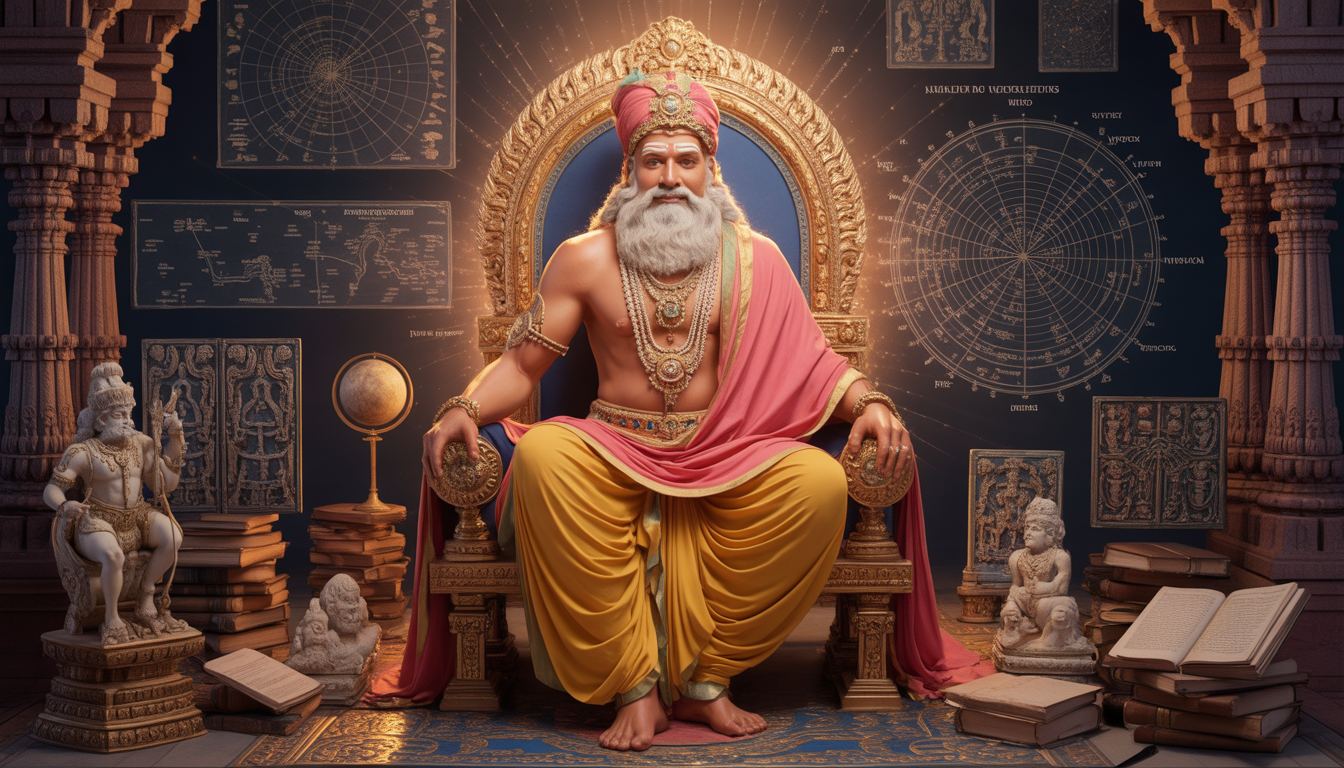
His name is Mahakal.
The Ancient Decree
The tradition stems from the very nature of Mahakaleshwar — the Lord of Time, the supreme deity of Ujjain. According to ancient Hindu texts and the city’s oral tradition, Mahakal is not merely a deity worshipped in a temple. He is the reigning king of Ujjain itself. The city is his kingdom. The people are his subjects. Every other form of human authority is considered temporary and subordinate.
For a mortal king or ruler to sleep within Ujjain is, therefore, an act of usurpation — of claiming equal or superior status to Mahakal. It is an act the ancient city has never tolerated.
The Skanda Purana explicitly refers to Ujjain as “Mahakal’s city” and to the deity as its eternal sovereign. This theological status translated, over centuries, into a real and observed political custom.
The Rulers Who Followed This Rule
The Maratha Empire
The Marathas, who controlled Ujjain from the 18th century and made it a significant political capital under the Scindia dynasty, were devotees of Mahakal. The Maratha rulers — despite using Ujjain as an administrative centre — are said to have taken care never to officially “reside” within the sacred city precincts. Official residences and courts were maintained at a respectful distance.
Mughal-Era Acknowledgement
Historical accounts from the medieval period note that even rulers with no particular devotion to Shaivism treated Ujjain with an unusual deference — avoiding ostentatious displays of royal power within the city that other sacred towns did not command.
The British Period
Perhaps most remarkably, British colonial records from Ujjain reflect an unusual degree of restraint in the city. Officers who were stationed in Ujjain reportedly maintained residences slightly outside the most sacred precincts. Whether this was strategic, diplomatic, or a genuine acknowledgement of local tradition is debated — but the pattern is consistent.
What Happens If Someone Violates the Rule?
History is full of cautionary tales — told by devotees and historians alike — of rulers who attempted to assert dominance in Ujjain and suffered consequences. The Skanda Purana warns directly:
“He who declares himself king in the city of Mahakal shall find his throne does not last.”
Modern politicians visiting Ujjain are still advised by local priests to avoid staging political events that imply rulership or authority within the city. Many senior politicians observe a practice of completing their darshan and departing before nightfall — not merely out of scheduling convenience.
The Deeper Meaning: Why Mahakal Alone Is King
This tradition reflects something profound about Ujjain’s spiritual identity. Most cities are defined by their rulers — Jaipur by the Rajputs, Hyderabad by the Nizams, Delhi by whoever currently holds power. Ujjain is defined by Mahakal.
“Mahakal” means the Great Time — the force that conquers and outlasts all other forces. Kings rise and fall. Empires are built and destroyed. Time — Mahakal — continues. The rule that no king may sleep in Ujjain is, at its core, a reminder that all human power is temporary. The only permanent sovereign is Time itself.
Every morning at 4 AM, when the priests perform the Bhasma Aarti — smearing the Shivalinga with sacred ash — traditionally linked to the cremation ground — they are re-enacting this truth. Ash is what kings become. Ash is what all of us become. Only Mahakal endures.
Visiting Ujjain Today
This ancient tradition continues to shape the experience of Ujjain for those who understand it. When you walk through the Mahakal Corridor before dawn, when you stand in the pre-dawn darkness waiting for the Bhasma Aarti to begin, you are standing in a city that has refused — for two thousand years — to bow to any mortal authority.
That feeling is real. And it is unlike anywhere else in India.
The King Who Ruled From Outside the Throne of God
Anyone who spends time with the storytellers of Malwa eventually asks the obvious question. Ujjain was the capital of Vikramaditya — the most celebrated king in Indian legend, the ruler whose very name became a title that later dynasties borrowed for a thousand years. If no king may spend the night in Ujjain, how did Vikramaditya rule from it?
The old tellers have an answer ready, and it is more beautiful than any loophole. Vikramaditya, they say, never ruled Ujjain as its owner. He ruled it as its caretaker. In some versions of the story he held court in the city by day and withdrew beyond its limits when darkness fell. In others, he laid his crown before Mahakal and governed only as the deity’s minister — a servant administering the estate of a master who never dies. The versions differ. The conclusion never does: the throne of Ujjain was already occupied, and the wisest king in Indian memory was wise precisely because he understood that.
Seen this way, the rule is not a curse aimed at kings. It is a definition of kingship itself. Power, the tradition insists, is never owned. It is only held in trust — and every trust has a landlord.
What Ujjain Becomes After Dark
Stay in the old city past ten at night and you can feel the tradition rather than merely know it. The lanes around the temple empty out. The lamps along Ram Ghat throw long reflections across the Shipra. The last aarti bells fade, the shutters come down over the flower stalls, and a city that spent the entire day roaring with pilgrims turns unexpectedly, almost deliberately, quiet.
Ordinary people sleep in Ujjain every night — pilgrims in dharamshalas, shopkeepers above their shops, children in houses that have stood near the temple for generations. The rule was never meant for them. It was meant for the powerful. And so the night here carries a strange, democratic peace: this is one of the only cities on earth where, after dark, no human being outranks any other.
The Morning Court of the Eternal King
If the night belongs to Mahakal’s solitude, the dawn is his durbar. At 4:00 AM, while the sky is still black, the Bhasma Aarti begins — and once you know the legend of the sleeping city, the ritual reads differently. The king is being woken. He is bathed, anointed, adorned with sacred ash, and greeted with lamps, drums, and conch, exactly as a royal court would receive its sovereign at daybreak. The devotees packed into the hall are not an audience. They are courtiers at the first assembly of the day.
Attending it takes planning. Entry passes cost around ₹200 and are issued only through the temple’s official portal, www.shrimahakaleshwar.mp.gov.in — no agent, app, or hotel desk can sell you a genuine one. A step-by-step walkthrough of the process is in our Bhasma Aarti booking guide.
A Rule No One Enforces — and Almost No One Breaks
There is no law on any statute book that forbids a ruler from sleeping in Ujjain. No gate closes at dusk. No officer checks. That is what makes the tradition remarkable: it has survived purely on belief, and on the long memory of what is said to befall those who test it. Even today, it is widely reported that public figures who hold office time their darshan so that they leave the city before nightfall, staying instead in Indore or beyond the old limits. Whether each of them believes the legend or simply respects it, the effect is identical — the custom holds.
Empires backed by armies could not keep their laws alive for more than a few centuries. This rule, enforced by nothing except a story, has outlasted every one of them. That may be the quietest possible argument for its power.
Standing in the City of the Deathless King
For the traveler, the tradition is an invitation rather than a warning. Stay the night — the rule has never applied to pilgrims, and there is no better way to understand Ujjain than to sleep inside the kingdom of a god and wake for his four o’clock court. Walk the ghats after dark. Notice the silence, and notice what kind of silence it is: not emptiness, but occupancy. Then, in the morning, watch the ash rise off the Jyotirlinga and remember what every ruler from Vikramaditya onward is said to have accepted — crowns are borrowed, and Time alone wears one forever. The longer past of the shrine, through raids, ruin, and revival, is traced in our Mahakal temple history.