
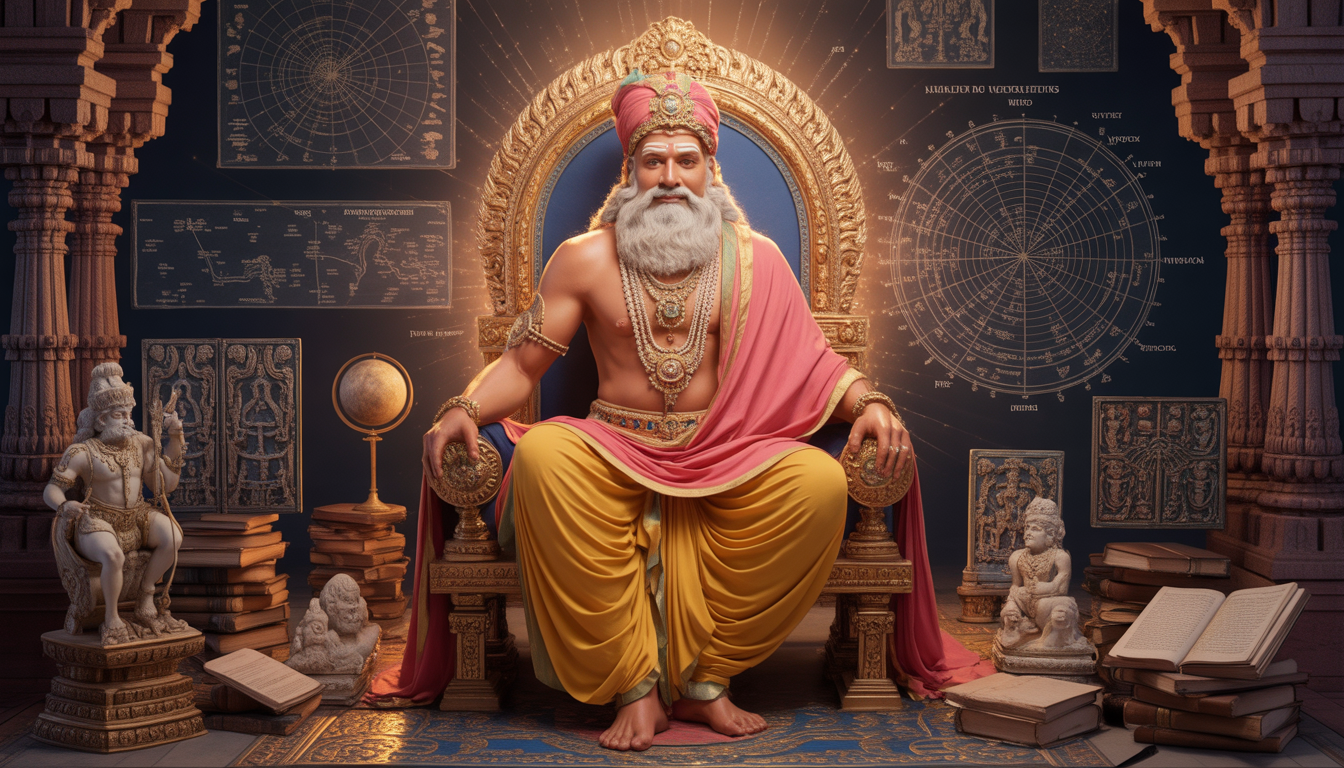
There is a rule in Ujjain that has existed for over two thousand years.
No king. No emperor. No ruler. No politician. Nobody who holds power over other humans is allowed to spend the night inside Ujjain city limits.
This isn’t a legend passed down by grandmothers. It is a documented historical tradition — one that Mughal rulers acknowledged, that Maratha kings strictly followed, and that even British colonial officers reportedly respected during their time in India.
The reason? In Ujjain, there is only one king. And he has held that throne for longer than any dynasty in human history.
His name is Mahakal.
The Ancient Decree
The tradition stems from the very nature of Mahakaleshwar — the Lord of Time, the supreme deity of Ujjain. According to ancient Hindu texts and the city’s oral tradition, Mahakal is not merely a deity worshipped in a temple. He is the reigning king of Ujjain itself. The city is his kingdom. The people are his subjects. Every other form of human authority is considered temporary and subordinate.
For a mortal king or ruler to sleep within Ujjain is, therefore, an act of usurpation — of claiming equal or superior status to Mahakal. It is an act the ancient city has never tolerated.
The Skanda Purana explicitly refers to Ujjain as “Mahakal’s city” and to the deity as its eternal sovereign. This theological status translated, over centuries, into a real and observed political custom.
The Rulers Who Followed This Rule
The Maratha Empire
The Marathas, who controlled Ujjain from the 18th century and made it a significant political capital under the Scindia dynasty, were devotees of Mahakal. The Maratha rulers — despite using Ujjain as an administrative centre — are said to have taken care never to officially “reside” within the sacred city precincts. Official residences and courts were maintained at a respectful distance.
Mughal-Era Acknowledgement
Historical accounts from the medieval period note that even rulers with no particular devotion to Shaivism treated Ujjain with an unusual deference — avoiding ostentatious displays of royal power within the city that other sacred towns did not command.
The British Period
Perhaps most remarkably, British colonial records from Ujjain reflect an unusual degree of restraint in the city. Officers who were stationed in Ujjain reportedly maintained residences slightly outside the most sacred precincts. Whether this was strategic, diplomatic, or a genuine acknowledgement of local tradition is debated — but the pattern is consistent.
What Happens If Someone Violates the Rule?
History is full of cautionary tales — told by devotees and historians alike — of rulers who attempted to assert dominance in Ujjain and suffered consequences. The Skanda Purana warns directly:
“He who declares himself king in the city of Mahakal shall find his throne does not last.”
Modern politicians visiting Ujjain are still advised by local priests to avoid staging political events that imply rulership or authority within the city. Many senior politicians observe a practice of completing their darshan and departing before nightfall — not merely out of scheduling convenience.
The Deeper Meaning: Why Mahakal Alone Is King
This tradition reflects something profound about Ujjain’s spiritual identity. Most cities are defined by their rulers — Jaipur by the Rajputs, Hyderabad by the Nizams, Delhi by whoever currently holds power. Ujjain is defined by Mahakal.
“Mahakal” means the Great Time — the force that conquers and outlasts all other forces. Kings rise and fall. Empires are built and destroyed. Time — Mahakal — continues. The rule that no king may sleep in Ujjain is, at its core, a reminder that all human power is temporary. The only permanent sovereign is Time itself.
Every morning at 4 AM, when the priests perform the Bhasma Aarti — smearing the Shivalinga with ash from cremation grounds — they are re-enacting this truth. Ash is what kings become. Ash is what all of us become. Only Mahakal endures.
Visiting Ujjain Today
This ancient tradition continues to shape the experience of Ujjain for those who understand it. When you walk through the Mahakal Corridor before dawn, when you stand in the pre-dawn darkness waiting for the Bhasma Aarti to begin, you are standing in a city that has refused — for two thousand years — to bow to any mortal authority.
That feeling is real. And it is unlike anywhere else in India.
Frequently Asked Questions
Is the “no king in Ujjain at night” rule actually practised today?
The traditional rule is still respected in spirit. Senior politicians and officials visiting Ujjain for darshan typically complete their visit and depart the same day, often scheduling departures before nightfall. The practice is culturally and spiritually observed even if there is no legal enforcement.
Which scriptures mention this rule?
The Skanda Purana, which contains extensive accounts of Ujjain (referred to as Avantika), describes Mahakal as the eternal sovereign of the city. Local temple traditions and historical chronicles also document this custom.
Has any modern leader violated this rule?
Multiple senior Indian politicians have visited Ujjain for Bhasma Aarti and Mahakaleshwar darshan — all have followed the tradition of not staying overnight within the city as a ruler or in an official capacity.

AGARWALPRODUCT Anti Tarnish Stainless Steel Midnight Charism...
₹199.00 (as of April 2, 2026 07:06 GMT +00:00 - More infoProduct prices and availability are accurate as of the date/time indicated and are subject to change. Any price and availability information displayed on [relevant Amazon Site(s), as applicable] at the time of purchase will apply to the purchase of this product.)
Arihant Gems & Jewels 5 Faced Nepali Rudraksha with 925 Silv...
₹1,199.00 (as of April 2, 2026 07:06 GMT +00:00 - More infoProduct prices and availability are accurate as of the date/time indicated and are subject to change. Any price and availability information displayed on [relevant Amazon Site(s), as applicable] at the time of purchase will apply to the purchase of this product.)
Arihant Gems & Jewels® 8 Mukhi Nepali Rudraksha Pendent | Na...
₹2,847.00 (as of April 2, 2026 07:06 GMT +00:00 - More infoProduct prices and availability are accurate as of the date/time indicated and are subject to change. Any price and availability information displayed on [relevant Amazon Site(s), as applicable] at the time of purchase will apply to the purchase of this product.)