Phone:
(701)814-6992
Physical address:
6296 Donnelly Plaza
Ratkeville, Bahamas.

Phone:
(701)814-6992
Physical address:
6296 Donnelly Plaza
Ratkeville, Bahamas.

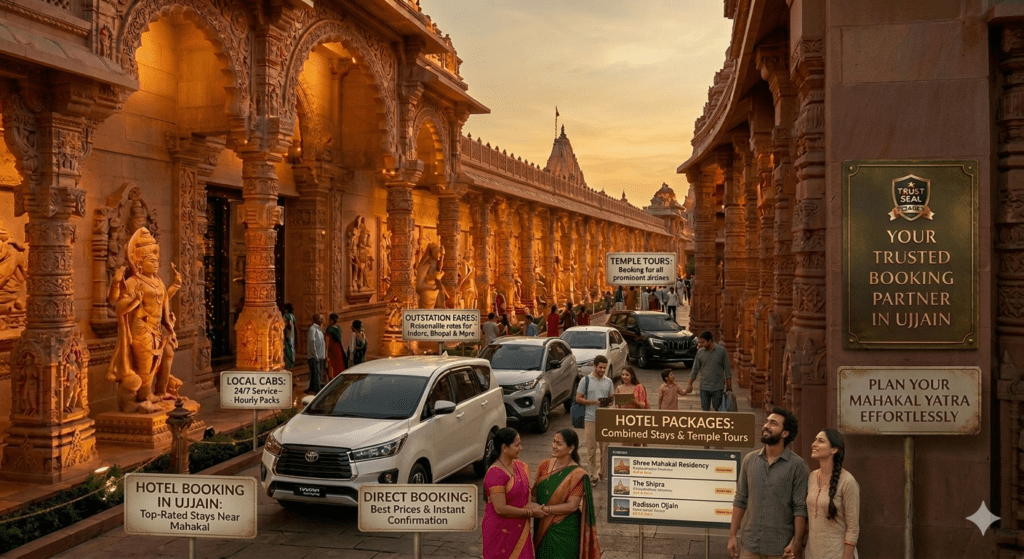
Ujjain is not merely a city with temples — it is a city that is a temple. Every street leads to a shrine, every ghat holds a legend, every stone has been touched by centuries of devotion. Known in ancient Sanskrit literature as Avantika, this holy city on the eastern bank of the Shipra River in Madhya Pradesh is one of India’s Sapta Puri — the seven sacred cities believed to grant moksha to those who visit with sincere devotion.
Ujjain is home to more than 100 temples and numerous pilgrimage sites of different eras, offering a unique blend of solitude and spiritual experience. Among these, a core group of temples collectively constitute one of the most spiritually comprehensive pilgrimage circuits available anywhere in India — spanning Shaivite Jyotirlingas, Shakti Peethas, Tantric temples, Vaishnava shrines, Ganesh mandirs, Krishna ashrams, and astrological temples dedicated to the nine planets.
For any pilgrim or traveler planning to visit Ujjain, knowing which temples to visit in Ujjain — their individual significance, their history, their darshan timings, and what makes each one spiritually unique — is the foundation of a meaningful journey. This guide covers 18 of Ujjain’s most important temples in depth, organized from the most essential to the most hidden, with practical visitor information updated for 2026.
Whether you have one day or five, whether you are a devoted Shiva bhakt, a seeker of Shakti blessings, a devotee of Lord Krishna, or a traveler drawn by history and mythology — the temples of Ujjain will exceed every expectation.
The most important temples to visit in Ujjain are: Mahakaleshwar Jyotirlinga (open 4 AM–11 PM), Kal Bhairav Temple (5 AM–7 PM), Harsiddhi Temple (5 AM–9 PM), Chintaman Ganesh Temple, Mangalnath Temple, Sandipani Ashram, Gopal Mandir, Gadkalika Temple, and Nagchandreshwar Temple (open only on Nag Panchami). Ujjain boasts over 100 temples and various pilgrimage sites, including the Mahakal Mandir — one of the twelve Jyotirlingas — as well as several renowned Shakti Peethas.
Ujjain is one of the oldest cities in India, located beside the Kshipra River. It has been an important center of learning, pilgrimage, and astronomy for many centuries. The city is known for its temples, river ghats, and historic routes that reflect its long cultural history. The temples and old streets are active parts of the city — not merely tourist attractions.
What distinguishes Ujjain’s temples from those of other Indian pilgrimage cities is the sheer diversity of traditions they represent, all within a compact geographic area. A single day of temple visits in Ujjain can take you from a Jyotirlinga that is the only south-facing Shiva shrine in the 12-Jyotirlinga circuit, to a temple where liquor is the sacred prasad, to a Shakti Peetha marked by where Sati’s elbow fell, to a shrine where an 11th-century stone sculpture opens to the public for just one day per year.
Each temple carries its own theological lineage — some trace their origins to the Skanda Purana or Matsya Purana, some to the Parmar dynasty, some to the Maratha rulers. Together, they make Ujjain the most multi-dimensional temple city in Madhya Pradesh, and one of the deepest in all of India.
QUICK FACT Ujjain was ruled by powerful kings such as Vikramaditya and Chandragupta II and served as a home to the legendary poet Kalidasa. The city’s temples are not just places of worship — they are living archives of over two thousand years of Indian civilization.
Before visiting, it helps to understand the distinct religious traditions represented across Ujjain’s temples:
| Tradition | Key Temples in Ujjain |
| Shaivism (Lord Shiva) | Mahakaleshwar, Mangalnath, Kal Bhairav, Chaubis Khamba, Nagchandreshwar |
| Shakti / Devi worship | Harsiddhi, Gadkalika, Patal Bhairavi |
| Ganesha worship | Bade Ganeshji Ka Mandir, Chintaman Ganesh |
| Vaishnavism (Vishnu/Krishna) | Gopal Mandir, Ram Janardhan, ISKCON |
| Vedic Astrology (Navagraha) | Navagraha Temple (Triveni Ghat), Mangalnath |
| Tantra tradition | Kal Bhairav, Gadkalika |
| Krishna legend (Gurukul) | Sandipani Ashram |
| Liberation (Moksha) | Siddhavat Temple |
| Hanuman devotion | Gebi Hanuman Mandir |
The supreme temple of Ujjain and one of the holiest in all of Hinduism.
The world-famous Mahakaleshwar Temple is 2 km away from the Ujjain Railway Station and is spread over a large area on the banks of river Kshipra. This is the only Jyotirlinga that faces south (Dakshinamukhi).
The heart and soul of Ujjain, the Mahakaleshwar Temple is one of India’s most powerful and revered Shiva shrines. The temple’s architecture beautifully blends Maratha, Bhumija, and Chalukya styles.
Significance:
The Mahakaleshwar Lingam is believed to be Swayambhu — self-manifested, drawing its power from within itself rather than from ritual installation. This quality is considered extraordinarily rare and makes the Jyotirlinga here one of the most potent in the entire 12-Jyotirlinga circuit. In the Garbhagriha of the Temple, there are silver statues of Shri Ganesha, Shri Kartikeya, and Parvati. On the inner wall of the roof, there is a Rudra Yantra made of 100 kg silver, and just under this is the Jyotirlinga.
The Bhasma Aarti:
The temple is well-known for its distinctive Bhasma Aarti — a unique ritual performed every morning before sunrise in which ashes are used to worship the deity. It is believed to be one of the most powerful forms of worship in Hinduism. This pre-dawn ritual begins at 4:00 AM daily and requires advance booking at the official temple portal.
Special occasion: On every Monday during Shravan, Mahakaleshwar — the ruler of Ujjain — takes a round of the city. This Mahakal Sawari procession is the most spectacular recurring event in Ujjain’s annual calendar.
| Detail | Information |
| Timings | 4:00 AM – 11:00 PM daily |
| Entry Fee | Free (general); VIP darshan ₹250–₹300 |
| Bhasma Aarti | ₹200; advance booking mandatory |
| Location | Jaisinghpura, near Rudra Sagar Lake |
| Distance from Railway Station | ~2 km |
| Architecture | Maratha, Bhumija, Chalukya blend |
The rarest temple experience in all of Ujjain — open just one day per year.
Situated on the third floor of Mahakal Temple in Ujjain, Nagchandreshwar Temple is dedicated to Lord Shiva. This 11th-century temple built by Parmar Dynasty’s Raja Bhoj is unique in many ways — including the fact that it opens for devotees only once a year on Nag Panchami. It is also the only place in the world where, instead of Lord Vishnu, Shiva is seen seated on the ten-faced snake.
The temple is dedicated to Lord Nagdevta (Snake Lord) and Lord Shiva. In the temple, Shiva and Goddess Parvati can be seen seated on Sheshnag or Ananta Sesha. It is believed that this idol was brought here from Nepal in the 7th century AD. This is a very rare idol of Shiva and Goddess Parvati.
The legend: In the ancient Mahakal forest, Takshaka Nag performed penance to appease Lord Shiva. Satisfied with his devotion, Lord Shiva granted him the boon of residing in this sacred place. It is believed that Takshaka Nag continues to reside at this location.
Nag Panchami 2026 — August 17: On this date, the temple opens from midnight, starting with the Collector’s puja and Mahant’s rituals, after which public darshan begins. About 2 lakh devotees arrive on the day at Mahakaleshwar Temple to have darshan of Shiva as Nagchandreshwar.
IMPORTANT NOTE The gates of Nagchandreshwar Temple are opened only on Nagpanchami — meaning the temple opens for just one day in a year, and on that day, more than two lakh people visit. If your Ujjain visit coincides with Nag Panchami, prioritize this darshan above all others. It is a once-a-year experience that most Ujjain visitors never witness.
The guardian of Ujjain — where liquor is the sacred offering.
Kal Bhairav Temple is a revered Hindu shrine dedicated to Kal Bhairav — a fierce manifestation of Lord Shiva — and is regarded as the guardian deity of the city of Ujjain. It is one of the most active temples in Ujjain, recording a footfall of thousands of devotees every day.
The liquor offering mystery:
The Kalabhairava Temple depicts the Tantra culture, which has always been a significant part of Hinduism. There is a traditional belief that the bull present in the temple was given as a wedding gift to Lord Shiva and Devi Parvati by King Daksha. A Shivalinga is placed in the middle of the temple, along with Nandi, who is believed to hear the secret wishes of the devotees and convey them to Lord Shiva.
Devotees offer bottles of liquor to the deity — and witnesses report the liquid visibly entering the idol’s mouth and disappearing, a phenomenon that remains unexplained and draws pilgrims and skeptics alike.
Theological significance: The worship of Kal Bhairav is associated with the Tantra cult of Hinduism. The main festival of the temple is Bhairav Ashtami, celebrated on the eighth day of the dark fortnight in the month of Margashirsha (November–December).
It is widely said in Ujjain that darshan at Mahakaleshwar is incomplete without visiting Kal Bhairav — the deity who serves as the city’s protector.
| Detail | Information |
| Timings | 5:00 AM – 7:00 PM |
| Entry Fee | Free |
| Location | Jail Road, Bhairavgarh, Ujjain |
| Distance from Mahakaleshwar | ~4–7 km |
| Special Festival | Bhairav Ashtami (Nov–Dec) |
One of the 51 Shakti Peethas and among Ujjain’s most visually spectacular temples.
The Harsiddhi Temple was built in honour of Goddess Harsiddhi and is one of the 51 Shaktipeethas across the country. Legend has it that when Lord Shiva was performing the Tandava while carrying Sati’s burning body, Vishnu released his chakra, which split her body into 51 parts. Devotees who flock to this temple believe that the Goddess’s elbow fell in Ujjain, where this temple was constructed.
The temple enshrines 3 Goddesses one on top of another — Annapurna (the Goddess of nourishment), Mahasaraswati (the Goddess of wisdom), and Mahalakshmi (the Goddess of wealth). The red sandstone temple is peculiar to the Maratha art of architecture.
The deepmala columns: The twin lamp pillars at the entrance of Harsiddhi Temple are among the most iconic religious structures in Madhya Pradesh. Two large and tall pillars with 726 light stands (Diyas) are situated in the temple courtyard. When all 726 lamps are lit simultaneously during Navratri, the courtyard transforms into an ocean of flame.
The twin lamps in the temple courtyard remain lit throughout the night, creating a mesmerizing sight for visitors. The temple is also known for its Navratri celebrations, which attract large crowds every year.
| Detail | Information |
| Timings | 5:00 AM – 9:00 PM |
| Entry Fee | Free |
| Location | Harsiddhi Marg, Jaisinghpura (adjacent to Mahakaleshwar) |
| Best Time | Navratri (October) for the deepmala lighting |
| Significance | One of 51 Shakti Peethas; Maratha architecture |
The gateway of Mahakaleshwar — where every Ujjain darshan begins.
Located at the entrance of the Mahakaleshwar Temple complex, Bade Ganeshji Ka Mandir houses one of the largest and most magnificently adorned Ganesha idols in Madhya Pradesh. Tradition holds that any puja or pilgrimage must begin with Ganesha’s blessings — making this the natural first darshan of every Ujjain temple tour.
Chintaman or Bade Ganeshji Ka Mandir is located close to the tank of the Mahakaleshwar Temple. Right in front stands a gigantic sculpture of Lord Ganesha — one of the most worshipped gods in India.
The idol is beautifully decorated daily with fresh flowers, gold and silver ornaments, sindoor, and seasonal adornments. The atmosphere of the small temple is festive and devotional even on ordinary mornings.
| Detail | Information |
| Timings | 4:00 AM – 10:30 PM |
| Entry Fee | Free |
| Location | Mahakaleshwar Temple entrance, Jaisinghpura |
| Best Combined With | Mahakaleshwar darshan (same premises) |
The wish-fulfilling Ganesha — one of Ujjain’s oldest and most serene temples.
The Chintaman Ganesh Temple is a famous temple in Ujjain hosting a grand idol of Lord Ganesha. As the name suggests, “Chintaman” indicates the deity as the assurer who can free the human mind from worries and anxieties.
The Chintaman Ganesh Temple, situated on the outskirts of Ujjain, is one of the oldest temples dedicated to Lord Ganesha. The name “Chintaman” means “the remover of worries,” and devotees believe that visiting this temple helps them overcome their anxiety and troubles.
What makes this temple unique: The Ganesha idol here is considered self-manifested (Swayambhu) — not made by human hands. Combined with the “Chintaman” epithet (the one who removes all worries), this gives the temple a spiritual power that draws devotees facing life challenges, new beginnings, and difficult decisions.
The temple atmosphere is significantly quieter and more contemplative than the Mahakaleshwar complex, making it ideal for families who want a peaceful darshan experience.
| Detail | Information |
| Timings | 5:00 AM – 9:00 PM |
| Entry Fee | Free |
| Location | Near Shipra River, outskirts of city |
| Distance from Mahakaleshwar | ~3 km |
| Best For | New beginnings, relief from anxiety, couples seeking blessings |
The birthplace of planet Mars — where astrology meets devotion.
Another sacred temple in Ujjain is the famous Mangalnath temple. The temple is considered to be the birthplace of the red planet, Mars. According to Matsya Purana, the temple is located on the spot where Lord Shiva had a violent battle with Andhakasura, and during the battle, three drops of Lord Shiva’s sweat fell from his forehead on the ground, forming a linga.
On the bank of River Kshipra, 5 km from the city, this temple is — as described in the Matsya Purana — the origin place of the Mangal (Mars) planet. A special worship ritual is done here on every Tuesday, attended by thousands of devotees who worship Mangal Linga.
Why Mangalnath is essential for pilgrims: Ujjain’s position as ancient India’s prime meridian gives it extraordinary astrological significance. Mars energy is considered to originate here — making Mangalnath Temple an important site for those with Mangal Dosha, Manglik conditions in their horoscope, or anyone seeking planetary peace (Graha Shanti puja). Priests here specialize in Mangal Dosh Nivaran rituals.
The hilltop location also offers one of the better panoramic views of Ujjain and the surrounding Shipra River landscape.
| Detail | Information |
| Timings | 5:00 AM – 10:00 PM |
| Entry Fee | Free |
| Location | Ankpat Marg, Agar Road, Ujjain |
| Distance from Mahakaleshwar | ~4–5 km |
| Special Day | Tuesdays (Mangalvar) — largest crowds |
| Best For | Astrology remedies, Mangal Dosha puja |
Where Lord Krishna received his education — one of Hinduism’s most profound historic sites.
Located along the banks of the holy Shipra River, Siddhavat Mandir is one of the sacred mandirs in Ujjain. Sandipani Ashram — directly adjacent — holds even deeper historical significance.
According to the Bhagavata Purana, Lord Krishna, his brother Balaram, and his closest friend Sudama received their entire education — the 64 Kalas (arts and sciences, from music to statecraft) — at this gurukul under the sage Sandipani, completing the entire curriculum in just 64 days.
The ancient banyan tree here is believed to have been planted by Goddess Parvati and holds divine powers. Devotees pray pitra tarpan and Kaal Sarp Dosh Nivaran Pooja under the sprawling shade, seeking salvation and freedom from worldly sorrows.
What to see at Sandipani Ashram:
| Detail | Information |
| Timings | 7:00 AM – 8:00 PM |
| Entry Fee | Free |
| Location | Mangalnath Marg, near Kshipra River |
| Distance from Mahakaleshwar | ~3–4 km |
| Best Combined With | Mangalnath Temple (same route) |
Ujjain’s most magnificent Vaishnava temple — a masterpiece of Maratha marble architecture.
The Gopal Mandir is situated at the centre of the city. Its atop and Garbhagriha are made of marble with statues of Devi Rukmani on the left and Shiv-Parvati on the right. The temple has main statues of Gopal Krishna in black colour stone and of Radhika in white. There is a Gemstone Plate on the Door in the Garbhagriha.
Built by the Maratha Queen Bayajibai Shinde in the 19th century, the Gopal Mandir is distinguished by its spectacular marble shikhara (spire) visible across the Ujjain skyline. The temple’s silver-plated doors — said to have been retrieved from Ghazni by Mahadji Scindia — are among the most architecturally remarkable temple doors in Madhya Pradesh.
The Harihar Milan: On Vaikunth Chaudas, the Sawari (procession) of Mahakaleshwar comes to this temple at midnight as Shiva goes and meets Gopal — popularly known as Harihar Milan (the divine meeting). After this, the procession of Gopal Ji comes to Mahakaleshwar on Bhasmarti, and the Tulsi Dal is offered from Gopal Ji to Mahakaleshwar. This annual meeting of Shiva and Vishnu — representing the essential unity of the two supreme deities — is one of the most theologically significant rituals in all of Ujjain.
| Detail | Information |
| Timings | 5:30 AM – 10:00 PM |
| Entry Fee | Free |
| Location | City centre, near main market square |
| Architecture | Maratha marble; silver-plated doors |
| Special Festival | Harihar Milan on Vaikunth Chaudas |
Where the poet Kalidasa received divine inspiration — Ujjain’s most literary temple.
Gadkalika Temple is an ancient Hindu shrine near Bhartrihari Caves, dedicated to Goddess Kali. It holds great religious significance, especially among students, as it is believed to be the place where Kalidasa worshipped Maa Gadkalika and gained knowledge. The walls of the temples are carved with an amazing curvature of various gods and holy signs. Navratri is the major festival celebrated here.
It is said that the great poet Kalidasa used to worship this same statue of Goddess Kali. The temple has statues of Maa Kali, Lord Vishnu, and Hanuman. This Temple is one of the ancient temples of Ujjain.
The legend of Kalidasa at Gadkalika is one of India’s most remarkable literary-spiritual stories: the poet, initially without wisdom or knowledge, prayed so intensely to Goddess Gadkalika that she appeared and touched his tongue — after which he became the greatest Sanskrit poet in history. Meghaduta, Kumarasambhava, and Abhijnanasakuntalam are considered his divine gifts.
For students, writers, artists, and anyone seeking creative blessing or intellectual growth, Gadkalika Temple carries a special resonance.
| Detail | Information |
| Timings | 6:00 AM – 9:00 PM |
| Entry Fee | Free |
| Location | Near Bhartrihari Caves, Shipra riverbank |
| Special Festival | Navratri (October) — peak spiritual intensity |
| Best For | Students, artists, writers; Navratri celebrations |
A 9th-century gateway to the ancient Mahakala-Vana forest — one of Ujjain’s oldest standing structures.
Chaubis Khamba Temple dates back to the 9th or 10th century, dedicated to Chhoti Mata and Badi Mata. It is an architectural marvel built during the times of King Vikramaditya. The temple got its name from the 24 pillars that adorn its structure. The entrance showcases the images of guardian goddesses — Mahalaya and Mahamaya — with their names inscribed on the footsteps. According to ancient tradition, this was the majestic entrance gate of the magnificent Mahakala-Vana.
Shri Chaubis Khamba Mata Temple is a unique spiritual site among the famous temples in Ujjain. It is famous for its 24 ornately carved pillars, which symbolize divine protection. The temple is dedicated to Goddess Chhoti Mata and Badi Mata, and it is believed that it wards off negativity and bestows blessings upon devotees. Its hilltop location offers a harmonious blend of devotion and natural beauty.
The 24 pillars of the temple are carved with extraordinary precision — representing the 24 forms of divine power. Each pillar is a separate artwork. The temple’s age makes it one of the oldest surviving structures in Ujjain.
| Detail | Information |
| Timings | 6:00 AM – 7:00 PM |
| Entry Fee | Free |
| Location | Gudri Chouraha, Jaisinghpura |
| Distance from Railway Station | ~2 km |
| Historical Period | 9th–10th century CE, King Vikramaditya era |
Ujjain’s astrological temple — dedicated to all nine celestial planets.
The temple of Navagraha, dedicated to the nine planets, is located on the Triveni Ghat of Shipra. Triveni Ghat is the site where the Khan River confluences with the Shipra River — a sacred confluence point associated with the mythological Saraswati river.
At the Navagraha Temple, the nine celestial bodies have separate shrines — Sun, Moon, Mars, Mercury, Jupiter, Venus, Saturn, Rahu, and Ketu. On the day of Shani Amavasya, more than five quintals of oil are poured on Lord Shani, and later the oil is auctioned.
The deities of the nine planets are housed in 9 different chambers. Each chamber has a small Lingam too. Small packets of different grains are offered as prescribed for Navagraha. It is an ancient temple believed to have been worshipped by King Vikramaditya.
The Triveni Ghat setting — with the Shipra River visible from the temple premises and the confluence sacred to Hindu tradition — makes the Navagraha Temple one of the most atmospherically distinctive in Ujjain.
Best time to visit: Saturday (Shanivar) when Lord Shani receives maximum devotion, or any Saturday that falls on Amavasya (new moon), when crowds gathering for Shani worship are particularly devout.
| Detail | Information |
| Timings | 6:00 AM – 8:00 PM |
| Entry Fee | Free |
| Location | Triveni Ghat, Shipra River, Ujjain |
| Best Day | Saturdays; Shani Amavasya |
| Special Offerings | Mustard oil for Shani; grain packets for all nine planets |
The sacred banyan tree planted by Goddess Parvati — a site of liberation and ancestral prayers.
Located along the banks of the holy Shipra River, Siddhavat Mandir is one of the sacred mandirs in Ujjain. It is famous for offering liberation from ancestral afflictions. The ancient banyan tree here is believed to have been planted by Goddess Parvati and holds divine powers. Legends whisper that Betal, the mystical spirit from Vikram-Betal tales, used to live on its branches. Devotees pray Pitra Tarpan and Kaal Sarp Dosh Nivaran Pooja under the sprawling shade, seeking salvation and freedom from worldly sorrows.
Siddhavat Temple, situated on the banks of the Shipra River, is revered for its sacred banyan tree. Pilgrims often visit to tie sacred threads around the tree’s branches. The holy tree and its spiritual aura make Siddhavat a notable temple in Ujjain.
Siddhavat is particularly significant for those who perform Pitra Puja — rituals for ancestral peace. Brahmin priests here specialize in these ceremonies. The enormous banyan tree itself is ancient and atmospherically powerful — spreading its aerial roots over a wide area near the river.
| Detail | Information |
| Timings | Sunrise to Sunset |
| Entry Fee | Free |
| Location | Ganesh Nagar, Shipra River, Ujjain |
| Best For | Pitra Tarpan, Kaal Sarp puja, ancestral rituals |
A temple of great architectural beauty dedicated to Lord Vishnu and Lord Rama.
The Ram Janardhan Temple is renowned for its intricate carvings and serene atmosphere.
The Ram Janardhan Temple is an excellent representation of Ujjain’s rich architectural heritage. The temple, dedicated to Lord Vishnu and Lord Rama, is decorated with beautiful carvings and sculptures that showcase ancient craftsmanship.
This dual-shrine temple — honouring both Ram (an avatar of Vishnu) and Janardhan (a name of Vishnu directly) — represents Ujjain’s Vaishnava tradition alongside its dominant Shaivite heritage. The temple’s stone carvings are particularly fine, featuring narrative panels from the Ramayana and Vishnu Purana.
| Detail | Information |
| Timings | 6:00 AM – 9:00 PM |
| Entry Fee | Free |
| Location | Ujjain city area |
| Best For | Vaishnava devotees; architecture enthusiasts |
One of 108 Hanuman temples in Ujjain — with extraordinary spiritual energy.
Gebi Hanuman Mandir is one of the 108 Hanuman temples established in the old town, and it still gives the ancient spiritual vibes. It is also believed that this temple in Ujjain has a nail of Hanuman Ji, and during the evening aarti, people feel the presence of Hanuman Ji. When you take part in the 8 PM aarti and chant Shree Ram 108 times, you eventually start crying. Due to its significance and faith, people come here on Tuesday evening to ward off their evil eyes.
The emotional intensity of the evening aarti at Gebi Hanuman — where devotees chant Ram’s name 108 times and many experience overwhelming devotion — gives this temple a reputation for direct spiritual experience that goes beyond its modest size.
| Detail | Information |
| Timings | 6:00 AM – 9:00 PM (evening aarti at 8 PM) |
| Entry Fee | Free |
| Best Day | Tuesdays (most auspicious for Hanuman) |
| Best For | Evening aarti experience; Hanuman devotees |
A significant Shakti Peetha in Ujjain dedicated to Goddess Bhairavi.
Patal Bhairavi Temple, located near the Mahakaleshwar Temple, is a revered temple in Ujjain dedicated to Goddess Bhairavi. It is considered one of the Shakti Peethas, where the lower lip of Goddess Sati fell, making it significant for its divine feminine energy. The temple’s spiritual ambience and historical importance make it a key temple in Ujjain.
The name “Patal” refers to the subterranean — this temple complex has underground sanctum areas that contribute to its mysterious, deeply devotional atmosphere. Goddess Bhairavi is one of the ten Mahavidyas — the ten wisdom forms of Shakti. Her temple near Mahakaleshwar gives the area an extraordinary concentration of spiritual energy from both Shiva and Shakti traditions.
| Detail | Information |
| Timings | 5:00 AM – 9:00 PM |
| Entry Fee | Free |
| Location | Near Mahakaleshwar Temple |
| Significance | Shakti Peetha; Goddess Bhairavi (lower lip of Sati) |
Ujjain’s centre of Krishna devotion — a peaceful sanctuary of marble and kirtan.
ISKCON Ujjain temple, also known as Shri Radha Madhan Mohan Mandir, is a radiant centre of devotion and spirituality. Adorned with exquisite marble idols of Sri Radha Madhan Mohan, Sri Krishna Balarama, and Sri Gaura-Nitai, the temple attracts visitors with its serene and peaceful atmosphere. Daily aartis and kirtans fill the air with divine energy.
ISKCON Temple which is located near Nanakheda Bus Stand in Ujjain. The religious significance of Ujjain is that Lord Shri Krishna and his brother Balaram studied here at Guru Sandipani Ashram.
The ISKCON temple provides a deeply calming contrast to the intense devotional energy of Mahakaleshwar. The gardens are immaculate, the kirtan is melodic, and the prasad is outstanding. Janmashtami (September 4, 2026) is celebrated here with extraordinary grandeur, drawing thousands.
| Detail | Information |
| Timings | 4:30 AM–1:00 PM; 4:30 PM–9:00 PM |
| Entry Fee | Free |
| Location | Near Nanakheda Bus Stand |
| Distance from Mahakaleshwar | ~5 km |
| Best Time | Evening aarti; Janmashtami (September 4, 2026) |
Not a traditional temple, but the most transformative new addition to Ujjain’s sacred landscape.
While not a temple in the traditional sense, the Mahakal Lok corridor — inaugurated in October 2022 — has become an essential part of every Ujjain temple tour. Spanning over 900 metres around the Mahakaleshwar complex, it is one of the most ambitious religious heritage projects in modern India.
Visitors can enjoy the grandeur of the Mahakal Lok, where the grand and beautiful statues installed in the corridor depict the mythological stories of Lord Shiva. The corridor features 108 elaborately carved pillars, sculptural panels narrating the cosmic legends of Mahakal, a towering Nandi at the temple-facing end, and illuminated landscaping that transforms the entire approach to Mahakaleshwar.
Walking the Mahakal Lok in the evening, when it is fully lit, is one of the most awe-inspiring experiences currently available anywhere in India.
| Detail | Information |
| Timings | Open throughout temple hours |
| Entry Fee | Free (general access) |
| Best Time | Evening (after 7 PM when fully illuminated) |
| Time Needed | 45–60 minutes |
Beyond the major temples above, Ujjain contains a legendary circuit of 84 ancient Shiva temples — the Chaurasi Mahadev Yatra — distributed across the city and surrounding areas.
Also known as the temple town of Madhya Pradesh, the city is home to more than 100 temples and numerous pilgrimage sites of different eras. The 84 Mahadev temples are described in the ancient Skanda Purana and represent different manifestations and aspects of Lord Shiva. Completing the full yatra is considered one of the highest acts of Shiva devotion — typically requiring several days and a knowledgeable local guide.
For visitors with limited time, focusing on the 5–8 most accessible Mahadev shrines along the main temple circuit enriches any Ujjain temple tour with an additional layer of Shaivite tradition.
| Temple | Timings | Entry Fee | Distance from Mahakaleshwar | Tradition |
| Mahakaleshwar Temple | 4 AM – 11 PM | Free (VIP ₹250) | 0 (central) | Shaivite / Jyotirlinga |
| Nagchandreshwar Temple | Only on Nag Panchami | Free | Within Mahakaleshwar complex | Shaivite |
| Bade Ganeshji Ka Mandir | 4 AM – 10:30 PM | Free | Mahakaleshwar entrance | Ganesha |
| Harsiddhi Temple | 5 AM – 9 PM | Free | ~500 m | Shakti Peetha |
| Chintaman Ganesh Temple | 5 AM – 9 PM | Free | ~3 km | Ganesha |
| Kal Bhairav Temple | 5 AM – 7 PM | Free | ~4–7 km | Tantric Shaivite |
| Gopal Mandir | 5:30 AM – 10 PM | Free | ~1.5 km | Vaishnava |
| Mangalnath Temple | 5 AM – 10 PM | Free | ~4–5 km | Shaivite / Astrological |
| Gadkalika Temple | 6 AM – 9 PM | Free | ~4 km | Shakti |
| Sandipani Ashram | 7 AM – 8 PM | Free | ~3–4 km | Vaishnava (Krishna) |
| Chaubis Khamba Temple | 6 AM – 7 PM | Free | ~2 km | Devi |
| Navagraha Temple | 6 AM – 8 PM | Free | ~3 km | Navagraha/Astrology |
| Siddhavat Temple | Sunrise–Sunset | Free | ~3 km | Liberation/Ancestors |
| Patal Bhairavi Temple | 5 AM – 9 PM | Free | Adjacent | Shakti Peetha |
| Gebi Hanuman Mandir | 6 AM – 9 PM | Free | ~2 km | Hanuman |
| Ram Janardhan Temple | 6 AM – 9 PM | Free | ~2 km | Vaishnava |
| ISKCON Ujjain | 4:30 AM–1 PM; 4:30–9 PM | Free | ~5 km | Vaishnava (Krishna) |
| Mahakal Lok Corridor | Temple hours | Free | Within Mahakaleshwar complex | Heritage/Spiritual |
Best for transit visitors or those with limited time: Mahakaleshwar Temple → Bade Ganeshji Ka Mandir → Mahakal Lok Corridor → Harsiddhi Temple → Ram Ghat
The complete essential circuit: Bhasma Aarti (4 AM) → Ram Ghat snan (6 AM) → Mahakaleshwar darshan + Mahakal Lok → Harsiddhi Temple → Bade Ganeshji Ka Mandir → Kal Bhairav Temple → Sandipani Ashram → Mangalnath Temple → Ram Ghat evening aarti
Day 1: Follow the one-day tour above Day 2: Chintaman Ganesh → Gopal Mandir → Gadkalika Temple → Chaubis Khamba Temple → Navagraha Temple (Triveni Ghat) → Siddhavat Temple → ISKCON Temple evening aarti
Mangalnath Temple (Mars/Mangal) → Navagraha Temple at Triveni Ghat (all nine planets) → Patal Bhairavi Temple → Sandipani Ashram (Gomti Kund)
Universal rules across all Ujjain temples:
For Bhasma Aarti specifically: Men must wear dhoti with bare upper body. Women must wear saree. These rules are strictly enforced by security staff.
At Kal Bhairav Temple: Liquor offering is accepted through specific channels near the main shrine. Purchase from authorised vendors outside the temple. Do not bring outside liquor from restaurants or shops.
IMPORTANT NOTE Entry into the Garbh Grah (inner sanctum) of Mahakaleshwar is only for Hindu devotees. Non-Hindus can visit the outer temple areas, Mahakal Lok corridor, and ghat areas freely.
📖 Recommended Reading: Complete Guide to Bhasma Aarti Booking at Mahakaleshwar Temple
A temple tour of Ujjain begins and ends at Mahakaleshwar — and no visit to Mahakaleshwar is complete without the Bhasma Aarti. Our complete booking guide covers the online registration process, darshan ticket types, dress code, reporting timing, and what to expect during this extraordinary pre-dawn ritual. Updated for 2026.
Q1. Which is the most important temple to visit in Ujjain?
Mahakaleshwar Jyotirlinga Temple is unquestionably the most important temple to visit in Ujjain. It is well-known for its distinctive Bhasma Aarti — a unique ritual performed every morning before sunrise in which ashes are used to worship the deity. It is one of the 12 Jyotirlingas — the most sacred abodes of Lord Shiva in the Hindu tradition. It is also the only Dakshinamukhi (south-facing) Jyotirlinga in the entire 12-Jyotirlinga circuit, giving it a singular cosmic significance.
Q2. How many temples are there in Ujjain?
Ujjain is home to more than 100 temples and numerous pilgrimage sites of different eras. The city also contains the legendary 84 Mahadev temples circuit (Chaurasi Mahadev Yatra) distributed across the city and its surrounding areas. Most visitors focus on the 15–20 major temples covered in this guide, which represent the core spiritual traditions of the city.
Q3. Is Kal Bhairav Temple a must-visit in Ujjain?
Absolutely. It is widely said in Ujjain that darshan at Mahakaleshwar is incomplete without visiting Kal Bhairav. This ancient temple is one of the eight famous Bhairav places of the Shaivite tradition. Traditionally, liquor is offered to Bhairav in the form of prasad. This place has special significance for the Kapalik and Aghora cult. The mysterious phenomenon of liquor disappearing into the deity’s mouth — witnessed by millions — makes this one of the most remarkable temple experiences in India.
Q4. When does Nagchandreshwar Temple open?
The gates of Nagchandreshwar Temple are opened only on Nagpanchami — once a year. On that day, more than two lakh people visit this temple. In 2026, Nag Panchami falls on August 17 — a Shravan Monday, making it doubly auspicious. The temple opens at midnight following the Collector’s puja, with public darshan continuing throughout the day until the evening of Nag Panchami when it is sealed again for the year.
Q5. What is unique about Harsiddhi Temple in Ujjain?
Harsiddhi Temple holds two extraordinary distinctions: it is one of the 51 Shakti Peethas of India (marking where Sati’s elbow fell), and it features the famous deepmala columns — twin towering lamp pillars holding 726 oil lamps that are lit simultaneously during Navratri, creating one of the most visually spectacular religious sights in Madhya Pradesh. The temple enshrines three goddesses one above the other — Annapurna, Mahasaraswati, and Mahalakshmi — in a Maratha-style red sandstone structure.
Q6. Why is Mangalnath Temple significant in Ujjain?
Mangalnath Temple, on the banks of River Kshipra, is — as described in the Matsya Purana — the origin place of the Mangal (Mars) planet. Ujjain’s ancient position as India’s prime meridian gave the city enormous astrological significance. Mangalnath is the primary site for Mangal Dosh Nivaran rituals and Navagraha puja. Priests here specialize in planetary peace ceremonies, and the temple attracts thousands on every Tuesday (Mangalvar).
Q7. Which Ujjain temple is connected to poet Kalidasa?
Gadkalika Temple holds great religious significance as it is believed to be the place where Kalidasa worshipped Maa Gadkalika and gained knowledge. According to legend, Kalidasa — initially without learning — prayed so intensely at this temple that the Goddess touched his tongue, granting him instantaneous literary genius. His works — including Meghaduta and Abhijnanasakuntalam — are considered his divine gifts from Goddess Gadkalika. The temple is especially significant for students and creative professionals.
Q8. What is the significance of Sandipani Ashram for a temple tour of Ujjain?
Sandipani Ashram is where Lord Krishna, Balaram, and Sudama received their entire education under Guru Sandipani. The ancient banyan tree here is believed to have been planted by Goddess Parvati, and the Gomti Kund adjacent to the ashram is a sacred reservoir believed to hold waters from all holy rivers, summoned by Lord Krishna for his Guru’s rituals. For devotees of Lord Krishna, this site — mentioned in the Bhagavata Purana and the Mahabharata — is as significant as any temple in Ujjain.
Q9. Can all the major temples in Ujjain be covered in one day?
The 8–10 most important temples can be covered in a well-planned single day, starting with the pre-dawn Bhasma Aarti and ending with the Ram Ghat evening aarti. The core circuit — Mahakaleshwar, Harsiddhi, Bade Ganeshji, Kal Bhairav, Sandipani Ashram, and Ram Ghat — fits comfortably in 10–12 hours. Two days allows for a much more relaxed and complete experience including Gopal Mandir, Gadkalika, Chaubis Khamba, Navagraha Temple, and Siddhavat Temple.
Q10. What is the Harihar Milan and which temples are involved?
On Vaikunth Chaudas, the Sawari (procession) of Mahakaleshwar comes to Gopal Mandir at midnight as Shiva goes and meets Gopal — popularly called Harihar Milan (the divine meeting). After this, the procession of Gopal Ji comes to Mahakaleshwar on Bhasmarti, and Tulsi Dal is offered from Gopal Ji to Mahakaleshwar. This once-a-year meeting of Lord Shiva and Lord Vishnu — representing the essential unity of all divine forces — is one of the most theologically profound events in Ujjain’s annual sacred calendar.
Ujjain’s temples are not a list to complete — they are a world to inhabit. The temples and old streets of Ujjain are active parts of the city, not merely tourist attractions. Visiting these sites allows travelers to observe living traditions rather than only monuments from the past.
Each of the 18 temples covered in this guide represents a distinct current of devotion, mythology, history, and cosmic significance. Mahakaleshwar anchors the entire city as the supreme Jyotirlinga. Kal Bhairav stands guard at the city’s spiritual boundary. Harsiddhi Temple blazes with Shakti energy during Navratri. Nagchandreshwar opens for a single extraordinary day every year. Sandipani Ashram connects Ujjain to the childhood of Lord Krishna. Gadkalika Temple links it to the genius of the greatest Sanskrit poet. The Navagraha Temple at Triveni Ghat grounds the city’s astronomical heritage in active daily worship.
Together, these temples make Ujjain one of the most complete and multi-dimensional sacred cities on earth — a place where the full breadth of the Hindu tradition can be experienced within a single pilgrimage.
Plan your circuit thoughtfully, dress with respect, arrive with reverence — and Ujjain’s temples will offer you far more than darshan. They will offer you a direct encounter with the living divine.
For Bhasma Aarti booking, Ujjain temple tour planning, and pilgrimage guidance, visit bhasmaartibooking.com.