Phone:
(701)814-6992
Physical address:
6296 Donnelly Plaza
Ratkeville, Bahamas.

Phone:
(701)814-6992
Physical address:
6296 Donnelly Plaza
Ratkeville, Bahamas.

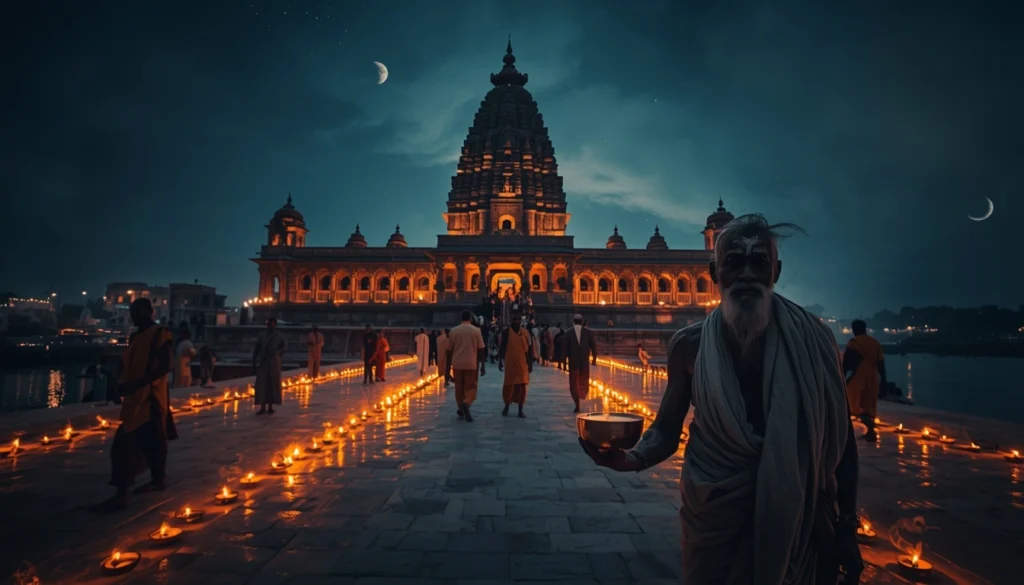
| 📌 Quick Answer: What Is Bhasma Aarti Online Booking? Bhasma Aarti Online Booking is the free, official process to reserve your darshan slot at Mahakaleshwar Jyotirlinga Temple, Ujjain. You can book up to 30 days in advance at bhasmaartibooking.com. The aarti happens daily between 4:00 AM – 6:00 AM. Each devotee needs a valid government photo ID. Booking is 100% free — anyone charging you money for it is running a scam. |
I’ve grown up waking up to the sound of temple bells. My nani’s house is a 10-minute walk from the Mahakal temple. I’ve attended Bhasma Aarti more times than I can count — in summer, during Shravan, on Mahashivratri when the city turns into something otherworldly, and even on ordinary Tuesday mornings when there are only a few hundred of us in that hall.
And every single time I see a pilgrim from outside Ujjain standing confused at the gate — turned away because of a wrong booking, a missing ID, wrong dress — something inside me breaks a little. This guide is my way of fixing that.
Forget the dry official information. I’m going to tell you what actually happens, what the temple website doesn’t mention, what locals know that outsiders don’t, and how to make your Bhasma Aarti experience genuinely life-changing instead of a stressful logistical nightmare.
Everything you need starts at Shrimahakaleshwar — and ends with you standing before Lord Mahakal with your heart wide open.
Okay, I know you’ve probably read the Wikipedia version. Let me give you the Ujjain version.
Every single morning, before the rest of the world is even thinking about waking up, something ancient happens in the heart of our city. Priests from the Mahanirvani Akhara — one of India’s most respected Shaiva orders — enter the inner sanctum of the Mahakaleshwar temple. They bathe the Shivlinga, adorn it, and then perform the Bhasma Aarti: a ritual where sacred ash is offered to Lord Mahakal.
The word Bhasma means ash. The word Aarti means a ritual of light and offering. But together? It means something much deeper. It means standing at the threshold of time and death itself, in the presence of the one deity who conquered both.
Lord Mahakal is not just a temple deity to us. He IS Ujjain. Our city has no human king — Mahakal is the Raja, the emperor. Every royal tradition, every morning announcement in ancient Avanti, began with an offering to him. Bhasma Aarti is that tradition, alive and unbroken, every single day.
| 🎯 Fun Fact #1 — The Ash Mystery Historically, the bhasma used in this aarti was sourced from actual funeral pyres — a deeply Tantric tradition connected to Lord Shiva’s role as the lord of cremation grounds. Today, the ash is made from cow dung cakes (which are sacred in Hindu tradition). However — and this is something most visitors don’t know — on especially auspicious days like Mahashivratri, original chita bhasma (pyre ash) is still used in certain rituals. This is not advertised anywhere. It’s just something we know. |
Let me walk you through the exact process as of 2025. I’m going to include the things that confuse first-timers — because they confused me too, the first time I helped my cousin from Indore book it.
Visit bhasmaartibooking.com — this is the verified booking platform. The official temple website is shrimahakaleshwar.com but bhasmaartibooking.com is the direct, clean way to access your slot without confusion.
⚠️ Local Warning: There are at least 4–5 fake websites with names like ‘bhasmaartionline.com’ or ‘mahakalaarti.in’ that charge ₹200–₹500 for ‘guaranteed slots.’ I’ve personally seen Ujjain locals laugh at these. The booking is FREE. Always. No exceptions.
Use your mobile number for registration — OTP verification is required. Use a number you actually have active because the booking confirmation and entry SMS both come to this number. If your number doesn’t have good network in Ujjain (Jio works best here, followed by Airtel), save the PDF confirmation offline before you leave home.
Slots open exactly 30 days before the aarti date — not 29 days, not 31. Exactly 30. And they go fast.
Here’s the timing secret nobody tells you:
| 🔐 Local Secret: When Do Slots Actually Open? Slots for the next available date open at midnight (12:00 AM IST). For regular days, slots may stay open for a few hours. But for Shravan Mondays, Mahashivratri, Kartik Purnima, and Navratri? Those slots disappear within 15–20 minutes. I’ve seen Nandi Mandapam slots for Mahashivratri go in under 4 minutes. Set your phone alarm for 11:58 PM exactly 30 days before. Have your login and ID details ready. Don’t browse — go straight to the date selector. |
When you book online, you’ll see four options. Most outsiders have no idea what these mean. Here’s your local breakdown:
| Mandapam | What You Need to Know |
| Nandi Mandapam | The holy grail. Directly behind Nandi (Shiva’s bull), closest to the Shivlinga. Only about 100 people fit here. This is where VIPs and the most devoted early-arrivers sit. Best view, most sacred energy. Book this if it’s available — it rarely is. |
| Ganapati Mandapam | Second best option. Right behind Nandi Mandapam, with wide stairs where you can sit. Can accommodate around 400 devotees. Clear sightline to the sanctum. This is what most experienced pilgrims aim for. |
| Kartikeya Mandapam | A newer hall, behind Ganapati. Still a good experience — the view is similar from all three. Around 500 more devotees fit here. |
| Bhasmarti Mandapam | The large hall at the far end. The aarti is displayed on a large screen here. If it’s the only option — take it. Being in the same sacred space is still profoundly moving. Don’t skip Bhasma Aarti just because this is the only slot. |
| 💡 Pro Local Tip — Ganapati is the Sweet Spot Nandi Mandapam sounds glamorous but it’s so small and crowded that sometimes Ganapati gives you a better, more comfortable darshan. The view of the bhasma ritual is clear from all three inner mandapams. Don’t stress too much over which one — the experience transcends the seating. |
This step trips up a LOT of people. Here’s what you need for each person:
| ⚠️ Critical Warning — Name Mismatch = Denied Entry If your name on the booking says ‘Rajesh Kumar’ but your Aadhaar says ‘Rajesh Kumar Sharma’ — you could be turned away. This has happened to multiple people I know. Enter your FULL name exactly as it appears on your ID. No shortcuts. |
If online slots are full — or if you’re already in Ujjain — there’s a Bhasma Aarti Booking Counter near the temple entrance. It’s open from 10:00 AM to 3:00 PM daily. They take walk-in registrations for the next day’s aarti.
They will click your photograph on the spot and scan your ID. The confirmed list is announced at 5:00 PM, and you receive an SMS between 7:30 PM and 10:30 PM confirming your slot. This is genuinely first-come-first-served — arrive by 10 AM sharp if you want a reasonable slot.
This is the step most online guides skip and it confuses everyone: After booking online, you MUST visit the Mahakaleshwar Temple office on the day BEFORE your aarti (before 5:00 PM) to collect the physical admission pass/receipt. This physical slip is what you present at the gate. The digital booking confirmation alone is NOT sufficient for entry.
Yes, this is a bit inconvenient — especially if you’re coming from far away. Plan to reach Ujjain at least one full day before your Bhasma Aarti date. This is non-negotiable.
The aarti is never one fixed time — it follows the rhythm of the sun across seasons. Here’s the full picture:
| Period | Approximate Timings |
| Gate Opens for Entry | 2:30 AM (all year) |
| Jal Abhishek (Water Offering) | 3:15 AM – 4:00 AM |
| Bhasma Aarti Begins | 4:00 AM |
| Bhasma Aarti Ends | Approximately 5:00 AM – 6:00 AM |
| General Darshan Opens | 6:00 AM onwards |
| Winter months (Oct–Feb) | Slightly later, around 4:00–4:30 AM |
| Summer months (Mar–Jun) | Earlier, around 3:30–4:00 AM |
| 🕐 Local Reality Check on Timings The temple gate opens at 2:30 AM but on busy days (weekends, Mondays, festival days), the queue outside starts forming from midnight or even earlier. I have personally stood in a queue at 11:30 PM to ensure a good position for the next morning’s aarti. If you’re coming for Mahashivratri, show up by 10 PM the previous night. This is not an exaggeration. |
Okay. This section is important. The official rules say ‘wear dhoti and saree’ — but there’s a lot of nuance here that only people with real experience know.
If you are only watching the aarti from the mandapam and NOT doing the Jal Abhishek water offering:
| 🛍️ Local Shopping Secret — Where to Get Dhoti/Saree Near the Temple Don’t panic if you didn’t pack the right clothes. The lanes around the Mahakal temple (especially the alley near Gate No. 1 and the market behind Ram Ghat) have multiple small shops that rent and sell dhotis and sarees at very reasonable rates — starting from ₹50 for rental. The shopkeepers are used to pilgrims and will help you tie the dhoti correctly. Ask for ‘puja dhoti’ — they’ll know exactly what you need. |
Here’s what I’ve seen people get turned away for, based on real experiences:
| 🙏 A Word of Genuine Advice From a Local I’ve watched tourists treat this like a tourist attraction and I’ve watched devotees for whom this is the most important moment of their lives. The priests, the staff, the security — they can tell the difference. Come with genuine reverence. Follow every rule quietly and willingly. The energy in that hall is already sacred — you don’t need to do anything except be present and open. That’s when Mahakal actually meets you. |
Here is an honest, detailed walkthrough of the entire experience — including the parts that are genuinely challenging:
On festival days and Mondays, locals and serious pilgrims start gathering near the temple gates well before midnight. If you want a front position in the mandapam, this is when you show up. Bring a shawl, a small water bottle (leave it outside before entry), and a lot of patience.
Security checks begin. Your physical pass is verified, ID matched, dress code inspected. If everything is in order, you are directed to your allotted mandapam. The atmosphere at this hour is unlike anything you’ve experienced — hundreds of devotees in silence, the smell of incense, the darkness broken only by diyas.
Those with Jal Abhishek permission enter the garbhagriha. You have approximately 5 minutes to offer water to the Shivlinga and perform your puja. Men can touch the Shivlinga — women cannot but can offer water from their vessel. After Jal Abhishek, you return to your mandapam seat.
The sanctum gates open fully. Priests from the Mahanirvani Akhara enter — led by the Aghori Baba who carries the sacred bhasma. The atmosphere shifts instantly. Damru beats, conch shells, Vedic mantras. The Shivlinga is bathed, adorned, and then the bhasma is applied in the ancient ritual manner.
The entire aarti lasts approximately 45 minutes to an hour. Most people cry. I’m not being dramatic — this is simply what tends to happen in that space. The combination of the pre-dawn hour, the sacred vibration of the mantras, and the raw power of the Mahakal presence is… beyond description.
After the aarti, prasad is distributed. The temple then opens for general darshan. This is a good time to visit the other shrines within the complex — the Koti Teertha Kund, the Nandi Hall, the various satellite temples.
| 🎯 Fun Fact #2 — The 5 Daily Aartis of Mahakaleshwar Bhasma Aarti: Pre-dawn (~4:00 AM) — the awakening ritual Naivedya Aarti: Morning (~7:30 AM) — the offering of food Maha Bhog Aarti: Midday (~10:30 AM) — the noon offering Sandhya Aarti: Evening (~5:00 PM) — the twilight ritual Shayan Aarti: Night (~10:30 PM) — the sleep ritual Bhasma Aarti is the only one that requires pre-booking. All others are open darshan. |
Ujjain Junction is a major station on the Western Railway zone. Direct trains run from Delhi (Avantika Express, Ujjain Express), Mumbai (Avantika Express), Bhopal, Jaipur, and Ahmedabad. From Indore (55 km away), there are multiple trains daily — the fastest take about 1 hour.
Local Tip: If you’re coming from Indore airport, taking a cab (₹800–₹1,200) is the fastest option — 55–70 minutes depending on traffic. Shared cabs from outside Indore station to Ujjain cost around ₹120–₹150 per person.
NH 52 connects Indore and Ujjain — it’s a smooth highway. From Bhopal, it’s about 180 km on NH 46. The bus service (MPRTC) is reliable and frequent from both Indore and Bhopal.
Devi Ahilyabai Holkar Airport, Indore is the nearest airport (~55 km). No direct flights to Ujjain, but Indore has flights from Mumbai, Delhi, Bengaluru, and other major cities.
| 🎯 Fun Fact #3 — Ujjain Was Ancient India’s Greenwich In ancient India, Ujjain was used as the prime meridian for astronomical calculations. The Tropic of Cancer passes through Ujjain, and the ancient Vedh Shala (observatory) here was one of five observatories built by Maharaja Jai Singh II. Indian standard time was once calculated with Ujjain as the reference point — the city literally defined Indian time. Fitting, given that Lord Mahakal is the master of time itself. |
The single most important factor: stay as close to the temple as possible. Pre-dawn roads near the temple are often closed to vehicles — and you do NOT want to be 3 km away trying to find an auto at 2 AM.
| Stay Type | Details & Local Notes |
| Temple Trust Dharamshala | Priority accommodation run by the Mahakaleshwar Temple Trust. Very affordable (₹300–₹800/night). Apply directly through the temple trust. Rooms fill months in advance for festival dates. |
| Guest Houses Near Gate No. 1 | Multiple small guest houses within 200–400 meters of the temple. Best for pilgrims — owners are used to early morning departures. Budget ₹500–₹1,500/night. |
| Hotel Shipra Residency | Clean, mid-range hotel close to the temple zone. ₹1,500–₹2,500. Good for families. |
| Hotel Grand Tower / Avantika | Comfortable mid-range options. About ₹1,500–₹3,000/night. Can arrange early morning wake-up calls. |
| Ramada by Wyndham Ujjain | The premium option if budget isn’t a concern. Professional service, good rooms. ₹4,000+/night. A bit further from the temple but offers car drop. |
| Ram Ghat Area Guest Houses | If you want the full Ujjain experience — staying near Ram Ghat with river views, close to the temple. Great for spiritual travelers. |
| 💡 Local Accommodation Secret Many Ujjain families near the Mahakal area rent out rooms to pilgrims — especially during peak season. These ‘home stays’ are not listed on any booking app. Ask your hotel reception, or look for handwritten boards in the lanes near the temple saying ‘Kamra Uplabdh’ (Room Available). You’ll get basic but clean accommodation for ₹300–₹500, and the families are incredibly warm and helpful about temple timings and local guidance. |
| 🤫 The Local Secret: Best ‘Off-Peak’ Dates for Bhasma Aarti Want the most peaceful, intimate Bhasma Aarti experience? Come on a Wednesday or Thursday in the months of November, January, or February — avoiding any Monday, festival, or school holiday. The mandapam has 300–400 people instead of 1,000+. The priests perform the ritual with the same devotion. The bhasma smells the same. The mantras hit just as deep. But you can actually hear your own heartbeat. Some of my most profound experiences in that temple have been on completely ordinary winter mornings. |
After attending Bhasma Aarti, most people are back in their hotel by 7 AM with an entire day ahead. Here’s what I personally recommend:
| 🎯 Fun Fact #4 — Ujjain’s Famous Sons Ujjain is the birthplace of Kalidasa (author of Meghaduta and Shakuntala — arguably India’s greatest poet). It is also associated with King Vikramaditya whose legendary court of the Navaratnas (Nine Gems) is said to have met here. And Sri Krishna himself studied here at the Sandipani Ashram. Walking these streets means walking streets that have been sacred for at least 2,500 unbroken years. |
Yes. 100%. Not ₹1 is charged for booking a Bhasma Aarti slot at bhasmaartibooking.com or at the official temple counter. If anyone is charging you — they are scamming you. Full stop.
Online, no. Online booking closes 24 hours before the aarti date. Walk-in counter booking at the temple is available a day in advance (before 3 PM). On the actual day of aarti — there is NO booking available. You must have your pass in hand.
You won’t get in. I know it sounds harsh, but the physical pass collection is mandatory. Visit the temple office before 5 PM on the day before your aarti. This is why arriving a day early is so important.
Children are not allowed inside the garbhagriha during Jal Abhishek. For the mandapam darshan of the aarti itself, older children (generally 10+) may be permitted — check current temple rules at bhasmaartibooking.com as these do change. For younger children, the pre-dawn timing and intensity of the ritual may also be challenging.
Nandi Mandapam is closest and most intimate. Ganapati Mandapam is a great second choice with more comfortable seating. From all three inner mandapams, the view of the actual bhasma ritual is genuinely good. Don’t skip the aarti just because Nandi isn’t available.
Local secret: If you can’t get a slot for Bhasma Aarti, attend the Sandhya Aarti (evening aarti, around 5 PM) or the Shayan Aarti (night aarti, around 10:30 PM). These require no booking and are open darshan. The Shayan Aarti especially — watching Lord Mahakal being ‘put to sleep’ for the night — is a deeply moving experience that very few outsiders know to attend.
I’m clearly biased. But I’ll tell you this — I’ve had friends who traveled from the US, from the UK, from Australia just for Bhasma Aarti. And every single one of them said the same thing: ‘Why did I wait so long?’ If you’re a Shiva devotee, or even if you’re simply someone open to the experience of something genuinely ancient and sacred — yes. It’s worth every kilometer.
| 📋 IMPORTANT NOTES — The Full Pre-Visit Checklist ✅ Book at bhasmaartibooking.com — free, official, verified ✅ Book exactly 30 days in advance for best availability ✅ Carry ORIGINAL government photo ID — Aadhaar preferred, PAN card NOT accepted ✅ Collect physical pass from temple office before 5 PM the day before ✅ Arrive at temple by 2:00–2:30 AM (earlier on festival days) ✅ Wear properly tied traditional dhoti (men) or saree (women) for Jal Abhishek ✅ Leave mobile phone, bag, leather items at cloak room or hotel ✅ Do NOT offer milk during Bhasma Aarti — only water for Jal Abhishek ✅ Maintain silence in the mandapam during the ritual ✅ Stay within 500 meters of the temple to walk to the gate at pre-dawn ⚠️ Never pay anyone for a ‘guaranteed’ slot — it’s a scam ⚠️ Readymade stitched dhoti = denied entry to garbhagriha |