Phone:
(701)814-6992
Physical address:
6296 Donnelly Plaza
Ratkeville, Bahamas.

Phone:
(701)814-6992
Physical address:
6296 Donnelly Plaza
Ratkeville, Bahamas.

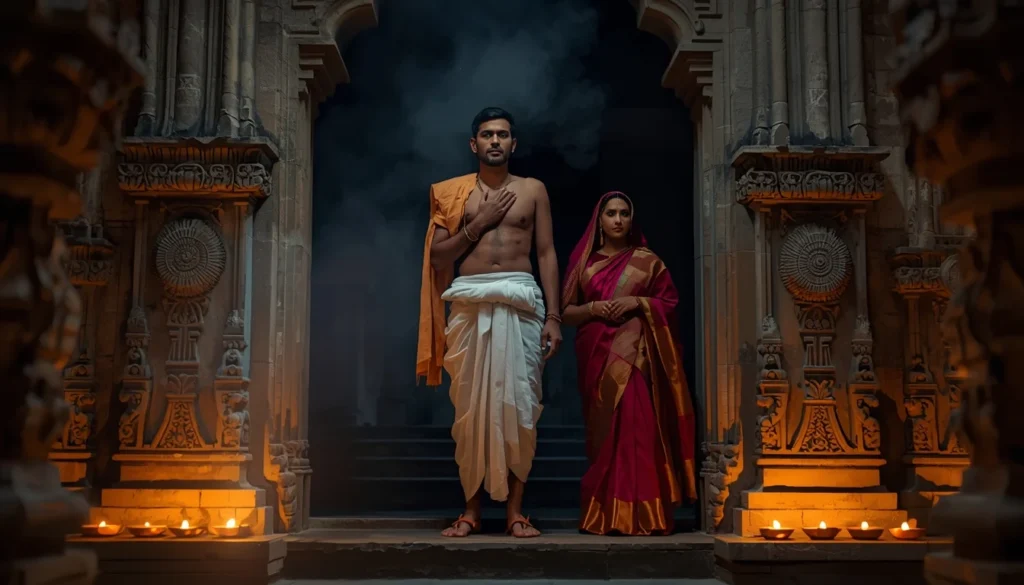
Let me be straight with you. I’ve watched hundreds of people — good, sincere devotees who traveled from Mumbai, Delhi, even from abroad — get turned away at the gate of Mahakaleshwar temple at 3 in the morning. Not because their booking was wrong. Not because they were late. But because of what they were wearing.
That is heartbreaking to witness. You’ve planned the trip for months, woken up before 2 AM, stood in the cold — and a guard politely but firmly shakes his head. “Dress code nahi hai.” Turn back.
I’m Rahul, born and raised in Ujjain, just 800 meters from Mahakal Mandir. My father attended Bhasma Aarti every Monday of his adult life. My nani used to wake us up at 2 AM on Shravan Somvars just to be in that queue. So when I tell you about the dress code for Bhasma Aarti — I’m not reading from a government circular. I’m telling you what I’ve seen, lived, and learned the hard way.
This guide covers everything: what men wear, what women wear, the Jalabhishek rules that nobody talks about online, what to do if you forgot to bring a dhoti, what NOT to wear even if it looks ‘Indian enough,’ the local market where you can buy everything at midnight if needed — and the unwritten rules that even the temple website won’t tell you.
| 📌 Quick Answer — Featured Snippet Bhasma Aarti dress code at Mahakaleshwar Temple Ujjain: • Men: Unstitched cotton dhoti (no shirt, no vest inside Garbhagriha). An angavastram or simple shawl may be carried. • Women: Saree or salwar kameez. Head must be covered with dupatta/pallu during the aarti. No Western clothing of any kind. • Both: No leather items. No jeans, shorts, T-shirts, or sleeveless wear. Traditional Indian ethnic attire is mandatory. • Special rule for Jalabhishek: ONLY unstitched dhoti for men. Readymade stitched dhotis are rejected at the gate. |
Most articles will just list the rules. Very few will tell you why they exist. And when you understand why — you’ll follow them not out of compulsion but out of genuine respect.
Bhasma Aarti isn’t a show. It isn’t a tourist attraction. It is the literal awakening of Lord Mahakal — the moment the deity transitions from his night-rest form into his active cosmic form. The priests who perform this ritual follow a tradition that is over a thousand years old. During this hour, the Garbhagriha (inner sanctum) holds an energy that Ujjain’s oldest families describe as “uska sakshat swaroop” — his direct presence.
In that context, the dress code is not a rule — it is a condition of readiness. Just as you wouldn’t enter a surgery room in street clothes, you don’t enter Mahakal’s awakening ritual without preparing yourself — including your body and what covers it.
The unstitched dhoti specifically carries deep meaning. In Vedic tradition, stitched clothing is associated with the physical world and material ego. An unstitched cloth — draped, not tailored — represents surrender. It says: “I come before you as I am, without the armor of worldly identity.” This is why the priests themselves wear only unstitched cloth during the ritual.
When you walk in wearing jeans or a half-sleeve shirt, you’re not just breaking a rule — you’re carrying the vibration of the marketplace into a sacred space. The temple staff is not being difficult. They are protecting the sanctity of something ancient and irreplaceable.
| 🎯 Fun Fact #1 The practice of wearing unstitched cloth during sacred rituals dates back to the Vedic period. Even today, during Shraddha ceremonies and important Shiva pujas across India, stitched clothing is avoided in the inner sanctum. At Mahakaleshwar, this tradition has been maintained continuously — making it one of the few active temples where the original Vedic dress custom is still strictly enforced. |
Alright, let me give you this in plain, practical language. No vague “traditional attire” nonsense. Here is exactly what you need.
If you are booked for general Bhasma Aarti darshan — meaning you’ll be seated in the Nandi Mandapam or barricade area watching the aarti from outside the inner sanctum — the rules are a bit more relaxed:
This is where the rules become strict and non-negotiable. If your booking gives you Jalabhishek access — meaning you’ll physically enter the inner sanctum — you must follow this exactly:
| Item | Rule |
| What You MUST Wear | Unstitched cotton dhoti — draped manually, not pre-stitched or Velcro |
| Above the waist | NOTHING — no shirt, no T-shirt, no vest, no baniyan. You enter bare-chested. |
| What you can carry | A simple angavastram (plain cotton cloth over shoulder) is allowed |
| Footwear | Removed before entry — deposited at the cloak room/outside |
| Dhoti type allowed | White or off-white cotton only. Silk dhotis with heavy borders: generally acceptable |
| Pre-stitched / readymade dhoti | REJECTED. Guards check this. Velcro-closure dhotis are not allowed. |
The Stitched Dhoti Trap — A Very Common Mistake: Many people buy what is sold in shops near the temple as “dhoti” — but these are actually readymade wrap-around skirts with Velcro or elastic. They look like dhotis but are stitched. A real dhoti is a single rectangular piece of unstitched fabric that you drape and tuck yourself. If you’ve never worn one, the shopkeepers in Mahakal lane will help you drape it. Don’t be shy to ask.
| ⚠️ Local Secret That Nobody Writes Online A TripAdvisor reviewer from Mumbai shared his experience: he was removed from the queue right near the Garbhagriha because he was wearing a readymade dhoti. He had traveled 14 hours. Guards checked by touching the waistband — if it has elastic or stitching, they ask you to step aside. The solution? Buy a simple 2.5-meter white cotton fabric from any cloth shop near Gopal Mandir or the market near the temple gate. It costs ₹80–₹120 and works perfectly. |
| 🎯 Fun Fact #2 The priests who perform Bhasma Aarti are from the Shri Mahanirvani Akhara — one of the oldest and most respected Akhara (monastic orders) in India. Only the designated Mahant (head priest) of this Akhara has the right to apply bhasma directly to the Shivlinga. This tradition has been maintained for centuries without a single day’s break. |
Women have been allowed to attend Bhasma Aarti fully for several years now — but there are specific clothing requirements and one rule that catches many women off guard.
| Attire | Is It Allowed? |
| Saree | Best choice. Any cotton or silk saree is fine. This is the traditional option and fully respected. |
| Salwar Kameez | Acceptable — must cover shoulders and knees fully. Chunni/dupatta is mandatory. |
| Lehenga / Ghagra Choli | Acceptable if it covers the full body modestly. Not too tight or transparent. |
| Punjabi suit | Fine — ensure it’s full-sleeved or that a stole/dupatta covers the arms. |
| Readymade saree / pre-stitched saree | These are now becoming common — generally acceptable as long as it looks like a saree and is modest. |
During the actual Bhasma Aarti ritual — specifically the moment when the bhasma is being applied to the Shivlinga — women are expected to cover their heads with their dupatta or pallu. This is not always enforced at the barricade level, but inside the Nandi Mandapam and especially near the Garbhagriha, temple priests will remind you.
The reason, according to the temple tradition: During Bhasma Aarti, Lord Mahakal is believed to be in his “Abhyang Snan” (anointing bath) state — a private, intimate ritual. The covered head is a gesture of respectful privacy, the way you’d avert your eyes or cover yourself when someone else is in a state of undress. It is not a rule about inferiority — it is a rule about intimacy and reverence.
| 💡 Insider Tip for Women (Shared on Quora by a Frequent Visitor) “I attended Bhasma Aarti three times. My recommendation for women: wear a cotton saree, preferably pre-draped at your hotel so you’re not struggling with pleats at 3 AM in the dark. Carry a safety pin. The floor gets damp near the sanctum and silk sarees can slip. Cotton is practical and traditional. If saree isn’t your thing, a full salwar suit with dupatta tucked around your head works perfectly. Nobody judges your fashion — they only check for modesty.” |
This is the most important thing I can tell you, and it’s the #1 source of confusion for first-timers. The Bhasma Aarti experience is actually made up of two separate rituals — and each has its own dress code.
| Ritual | What Happens | Dress Code Required |
| Bhasma Aarti Darshan | Watching the aarti from Nandi Mandapam / barricade area | Kurta-pyjama or saree/salwar kameez is fine. No bare chest required for men. |
| Jalabhishek | Entering the Garbhagriha to perform water-offering to the Shivlinga (before the aarti begins, around 3:15–4 AM) | Strict: Men must wear ONLY unstitched dhoti, bare chest. Women: saree only, head covered. |
Your booking pass specifies which access you have. Check it carefully. If you have Jalabhishek access and show up in a kurta, you’ll be asked to change — and if you can’t, you lose your slot. If you have only Darshan access, a kurta-pyjama works perfectly.
| ⭐ Featured Snippet — Quick Reference Q: What is the difference between Jalabhishek dress code and Bhasma Aarti dress code? A: For Jalabhishek (entering the Garbhagriha): Men must wear only an unstitched cotton dhoti with no shirt or vest. Women must wear a saree with head covered. For Bhasma Aarti darshan from outside the inner sanctum: Men can wear kurta-pyjama. Women can wear salwar kameez or saree. Western clothing is prohibited in both cases. |
This happens more than you’d think. People pack “Indian clothes” from home but don’t realize a kurta-pyjama isn’t sufficient for Jalabhishek, or they forget that readymade dhotis don’t work. Don’t panic. Ujjain has you covered — literally.
| Location | What You’ll Find |
| Mahakal Lane (lanes leading to temple gate) | Multiple small cloth shops. Open from early evening till late at night. You can buy plain cotton fabric for ₹80–150. Shopkeepers know exactly what you need — just say ‘Bhasma Aarti ke liye dhoti chahiye.’ |
| Harsiddhi Marg area | Cloth merchants and ready-to-wear kurta shops. Salwar kameez sets available for women starting ₹200–400. |
| Near Chhota Sarafa Bazaar | This market runs till 1–2 AM on busy nights. Affordable traditional clothing options for both men and women. |
| Temple cloak room helpers | Occasionally, the temple staff near the cloak room can direct you to a nearby stall for a last-minute dhoti — worth asking. |
| 🏪 Local Secret If you’re staying in a hotel or dharamshala near the temple, ask the front desk staff the night before: ‘Kya aap ke paas ek dhoti hai ya kahan milegi?’ Most places that host pilgrims regularly have spare dhotis they’ll lend or sell for ₹50–100. I’ve seen this work many times. The locals of Ujjain are very accommodating when it comes to Bhasma Aarti — we want you to have the darshan. |
Leather is strictly prohibited inside the Mahakaleshwar temple complex during Bhasma Aarti. This includes:
The reason is rooted in Shaivism: leather comes from animal hide, which represents the world of death and material existence. The Garbhagriha of Mahakal is considered the space of transcendence — you enter it symbolically leaving behind the material world. Even your wallet is considered “material attachment.” Leave it behind. The cloak room near Gate 1 is safe and free.
| ⚠️ Important Note Don’t try to carry your phone inside “just to check the time.” Mobile phones, cameras, and all electronic devices are not permitted inside the sanctum during Bhasma Aarti. There are no exceptions to this. There are clocks visible inside and temple staff manage the timing. Your phone will be safe in the cloak room locker. |
Children below 10 years generally do not require a formal booking. However, if they are accompanying you inside, they are expected to dress appropriately too.
From a TripAdvisor review by a family from Bangalore: “We brought our 7-year-old son. We dressed him in a small dhoti and simple kurta (we removed the kurta when we went for Jalabhishek). The guards were kind to him and he was allowed through. Our daughter, 9, wore a salwar suit with dupatta — no issues at all. The key is that the children look like they’re dressed for a temple, not a playground.”
Ujjain’s weather changes dramatically across the year. Your dress code stays the same — but how you manage the layers and comfort around it varies.
This is the hardest season for dress code compliance. Temperatures in Ujjain can drop to 5–8°C at 3 AM. You’ll be standing outside in a dhoti with no shirt.
Actually the easiest season for dress code. Light cotton dhoti is comfortable. Women in light cotton sarees or cotton salwar kameez will be fine. The pre-dawn hour is cooler than the day.
Shravan is Mahakal’s most sacred month and also when Ujjain gets rain. Wear cotton — it dries quickly. Carry a small plastic bag inside your dhoti fold for your booking slip to protect it from getting wet. Silk sarees become very difficult to manage in rain — pure cotton is more practical.
| 🎯 Fun Fact #3 Ujjain has one of the few temples in India that has never closed for even a single day in recorded history — not during floods, not during the pandemic (it briefly modified access), not during any political upheaval. The Bhasma Aarti has been performed every single morning without interruption. This is one reason locals call it ‘Nitya Aarti’ — the eternal, uninterrupted offering. |
| ✅ THE NIGHT BEFORE — Lay These Out FOR MEN: □ Unstitched white cotton dhoti (2.5 meters minimum) — NOT readymade □ Plain cotton angavastram / uttariya (shoulder cloth) □ Simple rubber chappals / sandals (easy to remove at shoe stand) □ Zero leather items (check belt, watch strap, wallet) □ Kurta or shawl for the walk to temple and queue (remove before sanctum entry) □ Your printed booking pass (keep dry) □ Original government photo ID FOR WOMEN: □ Saree OR full salwar kameez with dupatta □ Dupatta large enough to cover head □ Comfortable flat chappals (easy to remove) □ No leather bag — use cloth bag or small pouch □ Safety pins (at least 3 — essential for saree at 3 AM) □ Your printed booking pass (keep dry) □ Original government photo ID |
I’ve compiled these from what I’ve personally seen, plus accounts shared on TripAdvisor, Quora threads, and travel groups:
It’s not the end of your darshan. Here’s what you can do:
| 🙏 A Note from a Ujjainwasi Don’t feel embarrassed if you made a dress code mistake the first time. It happens to the most devoted people. Lord Mahakal sees your intention — the dress code is just the external preparation. Come back, dress right, and the darshan will be worth every early morning, every bit of cold, every minute of waiting. I promise you that. |
Yes. Men can wear a safa or pagdi — this is in fact considered especially respectful. The temple even mentions “dhoti and safa” as the ideal attire. If you have one, wear it with pride.
White or off-white cotton is the most traditional and most accepted. Light saffron cotton dhotis are also fine. Avoid dark colors or heavily printed fabric for the dhoti.
For barricade darshan (watching from outside the inner sanctum), kurta-pyjama is generally acceptable. However, to be fully safe and ensure no last-minute issues, wearing a dhoti is still the recommended choice. The guards’ judgment can vary, especially on busy festival days.
Foreign nationals are expected to follow the same dress code. The temple has a history of respectful accommodation — if you arrive in modest, non-Western clothing (even a simple white linen wrap), the staff will usually guide you. Carry your passport as ID. If unsure, contact the temple trust in advance.
Officially, there is no rental service. However, the shops in Mahakal lane sometimes lend dhotis for a small deposit. This is informal — don’t rely on it. Buy one before you come. A cotton dhoti costs ₹80–150 and is worth keeping as a memory of Ujjain anyway.
VIP darshan brings you closer to the sanctum, so if anything, the guards are more attentive. Dress code compliance is equally important — arguably more so since you’re entering a restricted zone. Dhoti for men, saree/salwar for women, head covered.
Dress code might seem like a small thing in the grand scope of a pilgrimage. But I’ve seen how it shapes the experience — not just for you, but for everyone around you.
When you walk into the Mahakaleshwar complex at 3 AM in a clean white dhoti, when you stand in the pre-dawn cold with nothing between you and the ancient air of Avantika — something shifts. The simplicity of the cloth is not poverty. It is clarity. It is readiness. It is the oldest language of devotion.
Follow the dress code. Book your slot early at bhasmaartibooking.com. And when that morning finally comes — when the bells ring and the bhasma rises and Lord Mahakal accepts your darshan — you’ll know that every rule you followed was not a restriction.
It was a preparation for grace.
Har Har Mahadev! 🙏
| 🌐 Book Your Bhasma Aarti Slot Official portal for Bhasma Aarti booking — FREE, verified, direct temple access: bhasmaartibooking.com Available 30+ days in advance. Always use the official portal only. |