TL;DR Summary: how to book bhasma aarti in ujjain: Your Complete Guide
- Mahakaleshwar Temple: Ujjain, MP. One of 12 Jyotirlingas. Open 3 AM to 11 PM daily.
- Bhasma Aarti: 4 AM daily ash-anointing ritual. Paid pass 1,500 to 3,000 rupees.
- Booking: Only on official mahakaleshwar.nic.in. 60-day advance window.
- Disclaimer: We do not facilitate bookings. Beware of fake agents charging extra.
The Morning I Almost Missed Bhasma Aarti (And What I Learned From It)
By Kshitij Kumawat
A local Ujjaini’s personal journey through booking, preparation, and witnessing the most sacred ritual at Mahakaleshwar Temple
Table of Contents
- The Phone Call That Changed Everything
- Why This Article Exists
- Chapter 1: Understanding Bhasma Aarti
- Chapter 2: The Booking Nightmare
- Chapter 3: The 48 Hours Before
- Chapter 4: The 4 AM Journey
- Chapter 5: The Unwritten Rules
- Chapter 6: The Mistakes I’ve Made
- Chapter 7: Experiencing Ujjain Properly
- Chapter 8: The Spiritual Side
- Chapter 9: Scams & Staying Safe
- Chapter 10: FAQ
- Final Thoughts
- About the Author
The Phone Call That Changed Everything
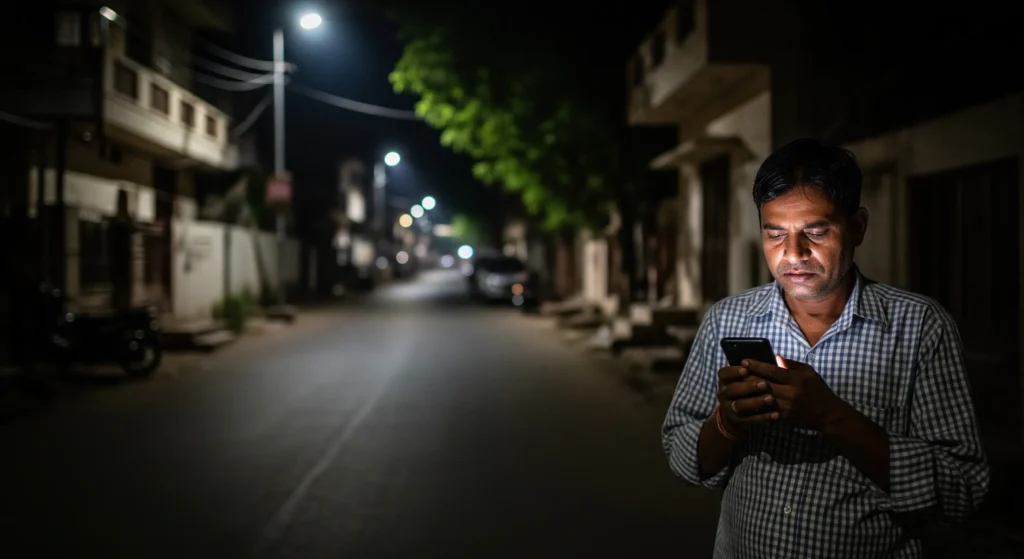
It was 2:47 AM when my phone buzzed. My cousin Rahul was standing outside my house in Freeganj, panic written all over his face through the video call.
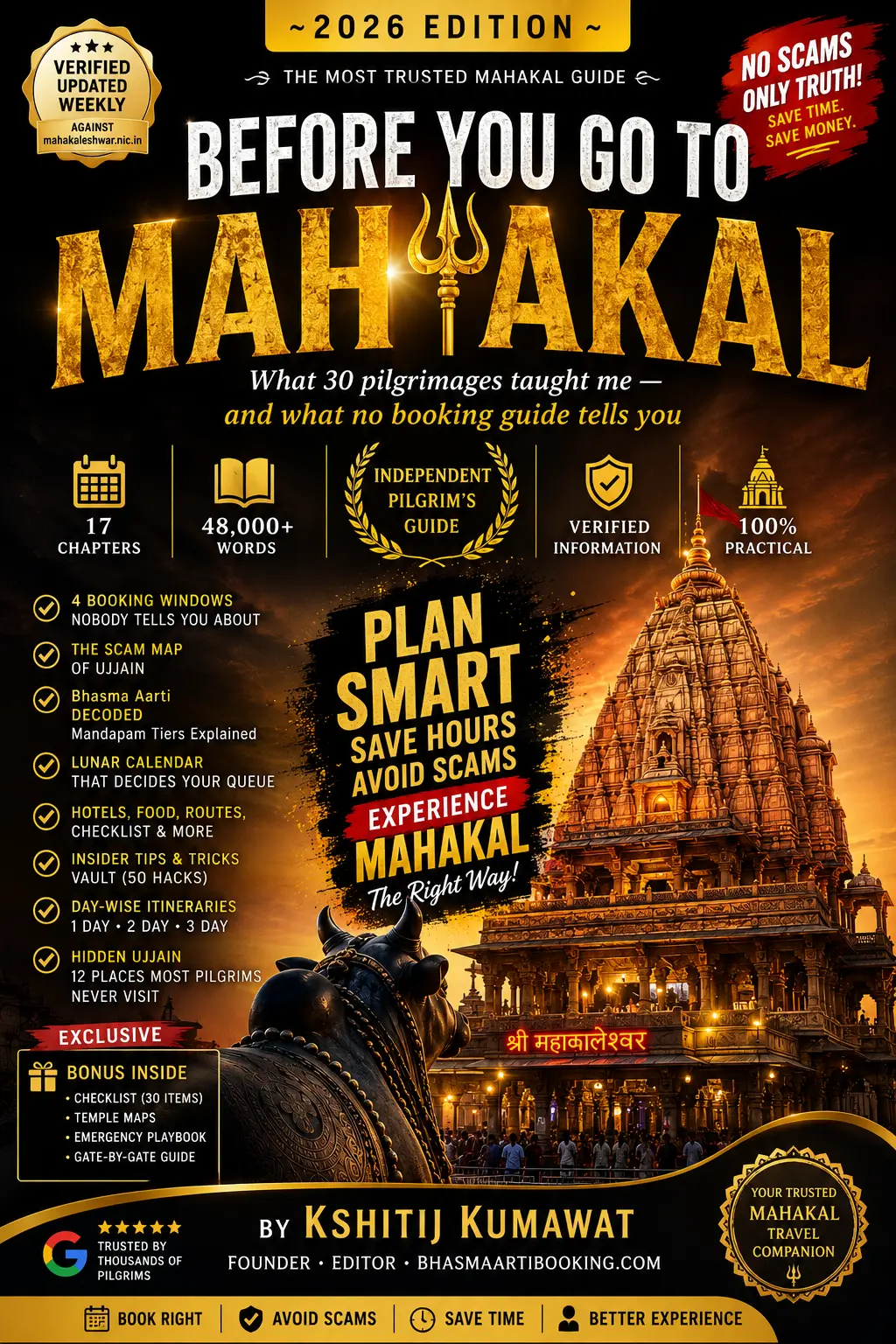
📕 120-Page PDF Guide
The Mahakal Devotee’s Insider Playbook
Self-help PDF guide to book Bhasma Aarti yourself · Mandapam tiers · Tithi calendar · Gate-by-gate map · Hotels & food · Day-trip itineraries · 17 chapters of insider know-how.
SAVE 85%
₹299₹2999
📩 Instant PDF on your email·📘 PDF guide — you book yourself·🔒 Razorpay secure·🔄 12-month free updates·🎯 Tested on 30+ pilgrimages
“Bhai, the SMS isn’t working. They’re not letting us in.”
I had warned him three times—print the confirmation, don’t rely on just the SMS. But like most first-time visitors to the Bhasma Aarti at Mahakaleshwar Temple, he thought he knew better.
I’m Kshitij Kumawat, born and raised in Ujjain. My family has lived in the shadow of Mahakal for four generations. I’ve seen this city transform from a quiet pilgrimage town to a bustling spiritual hub. And in those years, I’ve watched thousands of devotees make the same mistakes my cousin made that morning.
This isn’t just another “how-to” guide. This is the story of what really happens when you try to attend the Bhasma Aarti—the good, the chaotic, and the spiritually transforming. Everything I’m sharing comes from personal experience, countless conversations with temple priests, and yes, a few painful lessons learned at 3 AM.
Why This Article Exists
Three months ago, an elderly couple from Bangalore stopped me near Triveni Gate. They had traveled 1,200 kilometers, spent ₹15,000 on the trip, and were turned away because their online booking showed someone else’s name—a glitch in the system they couldn’t fix.
The wife was crying. The husband just stared at the temple dome.
That image haunted me for weeks.
I realized something: there are hundreds of articles about Bhasma Aarti booking, but none of them tell you what actually happens on the ground. The chaos at 2 AM. The confusion about dress codes. The scam artists lurking near Ram Ghat. The unexpected beauty of watching ash being applied to Lord Mahakal’s forehead as drums echo through the sanctum.
So I decided to write the guide I wish existed—told through my story, my mistakes, and what I’ve learned watching this sacred ritual unfold for over a decade.
Chapter 1: Understanding Bhasma Aarti (Beyond the Tourist Brochures)
What the Temple Won’t Tell You
The official description says Bhasma Aarti is performed daily from 4:00 AM to 6:00 AM. Technically true. Practically misleading.
The ritual actually begins at 3:45 AM with the Mangal Snan (auspicious bath). By 4:05 AM, the actual Bhasma application starts. By 4:30 AM, if you’re in Nandi Mandapam, you’ll see the priest’s hands trembling slightly as he applies the sacred ash—not from nervousness, but from the weight of tradition carried through 2,000 years.
My friend Pandit Shivakant Sharma, who assists in the morning rituals, once told me: “The Bhasma comes from the Mahakal Van cremation ground. We collect it following precise Vedic rituals. Each particle carries the essence of Samsara—the cycle of life and death.”
Here’s what makes Mahakaleshwar’s Bhasma Aarti unique among all Jyotirlingas:
- It’s the only Jyotirlinga where Bhasma Aarti happens daily—not on special occasions
- The Bhasma (ash) symbolizes Shiva as the destroyer and regenerator
- Lord Mahakaleshwar faces south (Dakshinmukhi)—the only such Jyotirlinga, representing His power over time and death
- The ritual follows 4,000-year-old Tantric traditions from the Avanti region
The Energy You Can’t Photograph
I’ve attended the Bhasma Aarti forty-seven times. Not because I’m particularly devout (though I am), but because I keep bringing visiting relatives who want to experience it.
Every single time, something happens that cameras can’t capture.
Last Mahashivratri, I was sitting in Ganapati Mandapam when a young techie from Hyderabad—AirPods still in his ears—suddenly broke down crying. The conch shell had just blown. The drums hadn’t even started. But something in that pre-dawn silence cracked something in him.
After the aarti, I asked him what happened.
“I don’t know,” he said, wiping his face. “I haven’t cried in eight years. I came here for Instagram photos. But when that sound echoed… I remembered my grandfather.”
That’s the thing about Bhasma Aarti. You come for the spectacle. You leave transformed.
Chapter 2: The Booking Nightmare (And How I Finally Cracked It)
My First Failed Attempt
Four years ago, when online booking was just introduced, I tried to book for my parents’ 30th anniversary. I had done everything the website said:
- Woke up at 7:55 AM
- Had my Aadhaar details ready
- Chose a date exactly 30 days out
By 8:02 AM, all slots were gone.
I tried again the next day. Same result.
On the third day, I did something different—I used two devices, two browsers, and had my sister trying simultaneously from her phone. Finally, at 8:00:47 AM, I got through.
That taught me the first rule: Bhasma Aarti booking is competitive, not convenient.
The Real Online Booking Strategy (That Actually Works)

After years of trial and error, here’s my foolproof method:
Step 1: The Official Website (And Only the Official Website)
Go to shrimahakaleshwar.com—I cannot stress this enough. Type it yourself. Don’t click Google Ads.
Last month, my neighbor paid ₹3,500 to a “booking agent” she found online. The website looked official. The confirmation looked official. When she arrived at 2:30 AM, the temple staff had never heard of her booking.
The official site is free for Bhasma Aarti registration (₹200 processing fee). Anyone asking for more is scamming you.
Step 2: Timing Is Everything (And I Mean Everything)
Slots open at 8:00 AM sharp, exactly 30 days before the aarti date. Not 8:01. Not 7:59.
Here’s my technique:
7:55 AM – Open the website. Don’t log in yet. Just stay on the booking page.
7:58 AM – Open the date selector. Keep refreshing.
7:59:45 AM – Finger on the refresh button.
8:00:00 AM – Click your date the instant it turns from red to green.
8:00:15 AM – Fill details. Do NOT take time to double-check. Fill first, verify later.
8:00:45 AM – Upload documents. Have them pre-cropped to 200×200 pixels.
8:01:30 AM – Make payment immediately. Don’t wait.
I’ve booked successfully 12 times using this exact timing. The longest I’ve taken is 1 minute 38 seconds from start to confirmation.
Step 3: The Documents Disaster Prevention
This is where most people fail. The system is EXTREMELY particular:
Photo Requirements:
- Exactly 200×200 pixels (not 199, not 201)
- Recent photo (last 6 months)
- Clear face, light background
- JPG format, under 100KB
Pro tip from painful experience: Take your photo now. Crop it. Save it. Test upload it on the website’s test page (yes, they have one under “FAQ” section). Don’t wait until booking day to discover your photo is 3KB too large.
ID Requirements:
- Aadhaar works best (instant verification)
- Passport/Driver’s License takes 2-3 extra seconds
- PAN Card often gets rejected (don’t ask me why)
Step 4: Choosing Your Hall (The Truth About “Best Seats”)
Three halls, three very different experiences:
Nandi Mandapam (100 seats):
- You’re 15 feet from the Jyotirlinga
- You’ll feel the vibrations of the drums in your chest
- You’ll see the priest’s expressions
- But it’s claustrophobic and gets very hot
- My rating: 10/10 for spiritual intensity, 6/10 for comfort
Ganapati Mandapam (400 seats):
- You’re 30-40 feet away
- Better ventilation
- You can still see the ritual clearly
- Less overwhelming for first-timers
- My rating: 9/10 for balanced experience
Kartikey Hall (600 seats):
- You’re 60+ feet away
- You’ll hear everything, see the overall atmosphere
- Most comfortable, least crowded feeling
- Good for elderly or those with mobility issues
- My rating: 7/10—spiritual, but distant
My honest advice? If it’s your first time, get Ganapati Mandapam. You’ll experience the power without being overwhelmed.
Step 5: The Confirmation (Save It Everywhere)
When you get the SMS, do this immediately:
- Screenshot it
- Email it to yourself
- Save the PDF confirmation from the website
- Print two copies (yes, two—I’ll explain later)
- Save it to Google Drive/iCloud
Why so paranoid? Because phones die. Emails don’t load. SMS messages mysteriously disappear. At 2:30 AM outside the temple gate, you want backup for your backup.
The Counter Booking Reality Check
The official story: “Counter opens at 7 AM, tickets available until 12:30 PM.”
The Ujjain reality: People start lining up at 5:30 AM. By 8:00 AM, the line is 200+ people. By 11:00 AM, tickets are usually gone.
I watched this process last Tuesday for research. Here’s what actually happens:
5:30 AM – First 10 people in line. Serious devotees. Chairs, thermoses, determination.
6:45 AM – Line has 60-70 people. Temple opens for morning rituals.
7:00 AM – Counter officially opens. First ticket issued at 7:04 AM.
7:30 AM – Line is now 150+ people. Arguments starting about line-cutting.
9:00 AM – 100 tickets issued. 50-70 left. Line still 200+ people.
11:17 AM – Last ticket issued. Crowd disperses. Heartbroken faces everywhere.
Real talk: Unless you’re willing to arrive before 6 AM and stand in line for 90+ minutes, online booking is your only realistic option.
The Scams You Need to Know About
I’ve seen every trick:
The “VIP Quota” Scam: A man near Ram Ghat will approach you (usually if you look like an outsider). He’ll say he’s from the temple trust. He has “special VIP quota” for ₹2,000-₹5,000. He’ll show you a laminated ID card.
It’s fake. Every single time.
The “Guaranteed Booking” WhatsApp Groups: Someone adds you to a group. They promise bookings for ₹500-₹1,000. They ask for advance payment. They disappear.
The “Official Looking” Websites: They rank high in Google. They have professional design. They charge ₹800-₹2,000. The booking confirmation looks real. It’s not.
How to identify them:
- Official site is only shrimahakaleshwar.com
- Official booking is maximum ₹200
- No WhatsApp bookings exist
- No “special quotas” exist
- No “guaranteed entry” services exist
If someone asks for more than ₹200, it’s a scam. No exceptions.
Chapter 3: The 48 Hours Before (What Nobody Tells You)
The Dress Code Drama
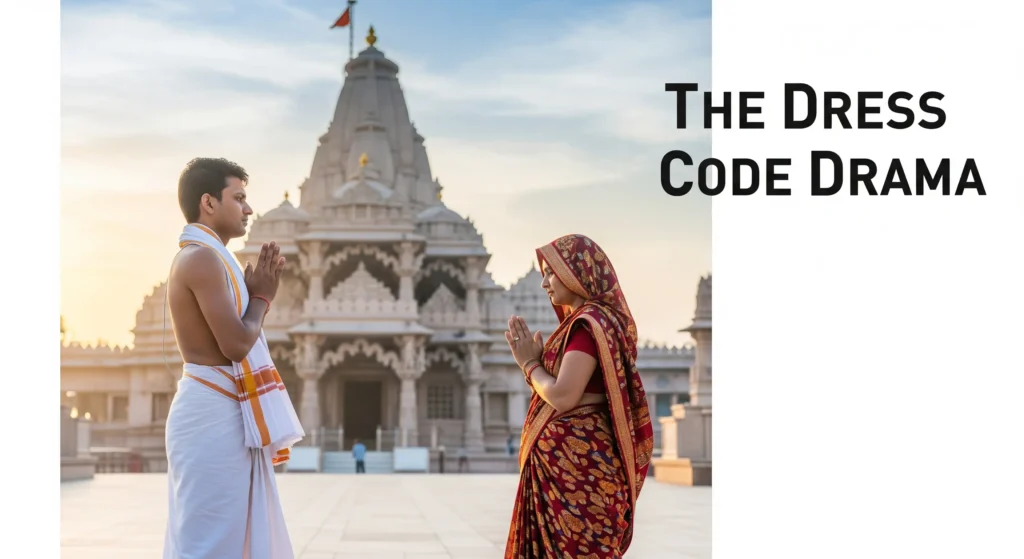
My cousin Priya learned this the hard way. She flew in from Delhi, booked three months in advance, arrived at 2:30 AM wearing a beautiful salwar-kameez with jeans underneath (it was January and freezing).
The guard stopped her: “No jeans allowed under kameez. Saree only, or traditional salwar without jeans.”
“But I don’t have a saree,” she said.
“Then no entry.”
At 2:30 AM in Ujjain, there are no shops open. She missed the Bhasma Aarti she’d planned for a year.
The Actual Dress Code (Not the “Recommended” One):
For Men:
- Dhoti is mandatory (not optional, not “recommended”)
- Angavastram (cloth over shoulder) is required
- Completely bare-chested above waist
- No shoes, no socks (you remove them at locker area)
- No leather items whatsoever
“But I don’t own a dhoti,” most men say.
Solution: Shops outside the temple rent/sell them. But here’s the catch—at 2:00 AM, only 2-3 shops are open. They know you’re desperate. Price goes from ₹50 to ₹200.
Better solution: Buy your dhoti the day before. Shops near Gopal Mandir sell good quality cotton dhotis for ₹100-₹150.
Even better: Practice wearing it at your hotel. Dhotis are tricky if you’ve never worn one. I’ve seen grown men nearly trip during the aarti because their dhoti came loose.
For Women:
- Saree is mandatory (not salwar-kameez, not lehenga)
- Fully draped, traditional style
- No jeans/pants underneath
- Blouse must be traditional (no spaghetti straps, no backless)
- Dupatta/pallu should cover head
Women’s specific challenges I’ve observed:
- “I don’t know how to drape a saree” – There are ladies near the temple who help with draping for ₹20-₹50
- “It’s too cold for just a saree” – Wear thermal inners underneath. The temple allows it as long as nothing shows.
- “What if it comes undone?” – Use safety pins. Lots of them. This is not the time for fashion risks.
For Children:
- Under 10 years: Not allowed in inner sanctum at all
- 10-18 years: Same dress code as adults applies
- No exceptions, even for infants (learned this from a heartbroken mother last year)
The Night Before Checklist (From Someone Who’s Forgotten Each Item At Least Once)
Documents Bag:
- Original ID (the exact one used for booking)
- Printed confirmation (two copies)
- Extra passport photos (the system occasionally demands re-verification)
- Hotel address written down (trust me, you’ll be disoriented after)
Clothes Bag:
- Dhoti + safety pins (3-4 large ones)
- Or Saree + safety pins (6-8)
- One shawl (it’s COLD at 3 AM, even in summer)
- Extra cloth to sit on (temple floor is marble and freezing)
- Regular clothes to change back into
Essentials Bag:
- Water bottle (small, 500ml—you can’t take it inside but you’ll need it before/after)
- Light snacks (you won’t eat inside but the wait drains you)
- Small towel (to wipe sweat—yes, you’ll sweat despite the cold)
- Any prescription medicines
- Pocket money: ₹500 in small notes (₹10, ₹20, ₹50)
Phone Bag (For the Locker):
- Your phone (you CAN’T take it inside)
- Charger
- Power bank
- Watch (smartwatches not allowed)
- Any jewelry (seriously, remove it all)
- Wallet
- Keys
- Belt with metal buckle
Pro tip: Wear minimal jewelry. The security check is thorough. Every metal item causes delay. Last week I watched a woman struggle for 10 minutes removing countless bangles.
The Hotel Strategy
Most people book hotels near the temple thinking it’ll be convenient. It is—except:
- Hotels within 500m of the temple are 2x-3x more expensive during peak season
- You’re paying for proximity you’ll barely use (you’re only sleeping 4-5 hours)
- The roads near the temple are so narrow that taxis can’t reach most hotels at 2 AM
My recommendation: Stay near Tower Chowk or Freeganj area. It’s 2-3 km from the temple, but:
- Hotels are 40-50% cheaper
- Wider roads for easier taxi access
- Better restaurants nearby
- Still just ₹50-₹80 auto-rickshaw ride to temple
Specific recommendations from personal experience:
Budget (₹800-₹1,999):
- Hotel Shiv Palace (Dewas Gate)
- Hotel Atithi (Tower Chowk)
- Gajanan Maharaj Dharmshala (if you don’t mind basic facilities)
Mid-Range (₹1,999-₹3,000):
- Hotel Shipra Residency
- Hotel Anjushree
- Hotel Imperial
Premium (₹3,000+):
- Minar Palace
- Clarks Inn Ujjain
The Sleep Calculation (Why You Need Less Than You Think)
Here’s the timeline most people don’t calculate:
8:00 PM – Dinner (you need time to digest before sitting for 2+ hours)
9:00 PM – Return to hotel, prepare clothes, documents
10:00 PM – Sleep (maybe)
1:30 AM – Wake up, get ready
2:15 AM – Leave hotel
2:45 AM – Reach temple, find locker
3:00 AM – Security check, enter mandapam
4:00-6:00 AM – Bhasma Aarti
6:30 AM – Exit, collect belongings, collapse in auto
7:00 AM – Back at hotel
Reality check: You’re getting 3.5 hours of sleep maximum. Your body will be running on adrenaline and devotion.
My advice: Sleep from 10 PM to 1:30 AM without interruption. Set three alarms. Tell hotel reception to call you at 1:30 AM as backup. I once slept through four alarms (exhausted from travel) and missed everything.
Chapter 4: The 4 AM Journey (What Actually Happens)
1:30 AM – The Wake-Up
Your alarm sounds like violence. You’re in a dark hotel room in Ujjain. For a moment, you question every decision that led to this.
Then you remember why you’re here.
Get up. Splash water. The grogginess will disappear once you step outside.
2:15 AM – The Streets of Ujjain
Ujjain at 2 AM is surreal. The streets you saw bustling yesterday are now silent. Chai stalls are closed. Shops are shuttered. But near Mahakal, the city never sleeps.
Auto-rickshaws congregate near hotels, drivers half-asleep until you approach. They immediately quote ₹100-₹150 for a ₹50 ride. Don’t bother arguing at this hour. Just negotiate down to ₹80 and go.
The ride takes 10-15 minutes. You’ll pass through empty streets, then suddenly turn a corner and see them—hundreds of people, all moving toward the temple like a slow river.
2:45 AM – Arrival and First Glimpse
The temple complex is LIT. Not just with lights—with energy. Incense smoke. Chanting in the distance. Priests in white walking purposefully. Devotees in traditional attire everywhere.
You’ll see:
- Families sitting on temple steps, eating packed breakfast
- Vendors selling last-minute flowers and prasad
- Policemen directing the growing crowd
- Old couples helping each other walk
- Young groups taking selfies (outside, where phones are still allowed)
First stop: Shoe locker
Near Gate 3, there’s a massive shoe/bag area. Free lockers if you bring your own lock (₹10 if you need to rent one).
This is where you put EVERYTHING except:
- Your ID
- Your printed confirmation
- Small cloth bag with essentials
- Your dignity (it’s about to be tested)
3:00 AM – Security Check (The Great Humbling)
The security check at Mahakaleshwar for Bhasma Aarti is more thorough than airports. I’m not exaggerating.
Male Security Line:
- Remove angavastram
- Arms up, full body scan
- Pat-down that’s invasive but necessary
- Metal detector wand over every inch
- Verbal confirmation: “Kuch phone, camera, metal hai?”
Female Security Line:
- Female officers only
- Same procedure but in a private tent area
- More respectful but equally thorough
I’ve seen people turned back for:
- A smart watch they forgot they were wearing
- Small metal clips in their hair
- A pen in their cloth bag
- An inhaler (they had to show it was medical, leave it, collect after)
The security isn’t being difficult. They’re protecting the sanctity of a 2,000-year-old tradition in the age of Instagram.
3:15 AM – Entering the Sanctum
You pass through the gates. The temperature drops—marble floors, high ceilings, ancient architecture designed for acoustic perfection.
The crowd is flowing but orderly. Volunteers in orange scarves guide you: “Nandi Mandapam? Left side. Ganapati? Center. Kartikey? Right.”
You find your section. You see your spot.
And then you sit.
3:20-3:55 AM – The Wait
This is when it hits you: you’re sitting cross-legged on cold marble in a 2,000-year-old temple, surrounded by 600-1,000 other devotees, waiting for a ritual that has happened every single morning for centuries.
The atmosphere is thick with anticipation.
Some people meditate. Some people whisper prayers. Some people (like me, the first time) look around in quiet awe.
Volunteers walk around with small baskets. “Flowers? Bel patra? Sweets?” Purely optional. I usually put ₹21 as offering.
First-timer observation: Your legs will start hurting around the 25-minute mark. Shift slowly. You’re not alone—everyone’s adjusting.
Unexpected detail: The smell. Incense, aged stone, ghee from diyas, and something indefinable that only ancient temples have. It’s intoxicating.
3:55 AM – The Silence Before
Suddenly, the whispers stop. Volunteers raise their hands: silence.
The energy shifts. Every single person in the sanctum is alert, focused.
You can hear your own heartbeat.
And then—
4:00 AM – The Conch Blows
The sound of the shankh (conch shell) being blown is not just heard—it’s felt. It reverberates through the marble, through your chest, through your skull.
It’s the sound that has announced this ritual for millennia.
The drums begin—mridangam, dholak, and the deep, resonant nagara.
And Lord Mahakal’s morning begins.
4:05-4:45 AM – The Bhasma Aarti (What You Actually See)
If you’re in Nandi Mandapam, this is what unfolds:
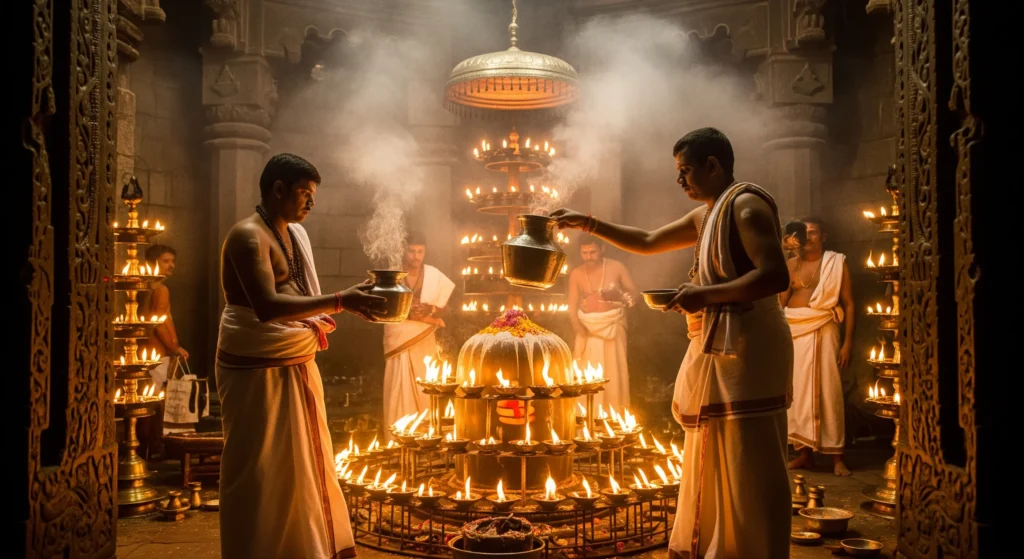
4:05 AM – The priests emerge. White dhotis, bare-chested, carrying silver vessels. Their movements are precise—every gesture rehearsed through generations.
4:10 AM – The Jyotirlinga is visible now. Dark stone, ancient, powerful. If you’re close enough, you’ll notice it’s Dakshinmukhi (south-facing)—tilted slightly toward the southern direction, unique among all 12 Jyotirlingas.
4:15 AM – The Mangala Snan begins. Water, milk, curd, honey, ghee—poured in sequence. Each substance represents something: milk for purity, honey for sweetness of devotion, ghee for illumination.
4:25 AM – The moment. Sacred Bhasma—ash from the cremation grounds, prepared with Vedic mantras—is brought forward in a silver pot.
The head priest’s hand hovers over the ash. He chants. The drums crescendo. And then he applies the first mark of ash to the Jyotirlinga.
That’s the moment.
That’s why you’re here.
4:30-5:30 AM – The ritual continues. More Bhasma. Ornaments are placed. Flowers offered. The Rudradhyaya (Shiva hymns) are chanted in precise Sanskrit.
The priests’ voices layer over the drums. It’s not melodious in the Western sense—it’s primal, ancient, hypnotic.
5:30 AM – The Shringar (adornment). The deity is decorated with silver ornaments. Fresh bel leaves. Flowers.
5:45 AM – The Aarti culminates. Camphor lamps are lit and waved in circular motion. The flames create patterns in the darkness. Bells ring in synchronization.
6:00 AM – The conch sounds again. The ritual is complete. Lord Mahakal’s morning worship is done.
What You’ll Feel (That Nobody Can Describe Accurately)
I’ve tried explaining this to friends. They nod politely but they don’t get it until they experience it.
The closest I can come:
Imagine sitting in complete darkness except for oil lamps. The smell of incense so thick it’s almost taste. Drums that you don’t just hear but feel in your sternum. Ancient Sanskrit words you don’t understand but somehow comprehend. And in front of you, a ritual so old that your great-great-great-grandfather’s great-grandfather could have witnessed the exact same movements, the exact same chants.
You’re sitting at the intersection of the temporal and eternal.
Your phone is gone. Your modern life is gone. For 90 minutes, you’re just a human in front of the divine, same as humans have been for 4,000 years.
That’s Bhasma Aarti.
6:00-6:30 AM – The Exit
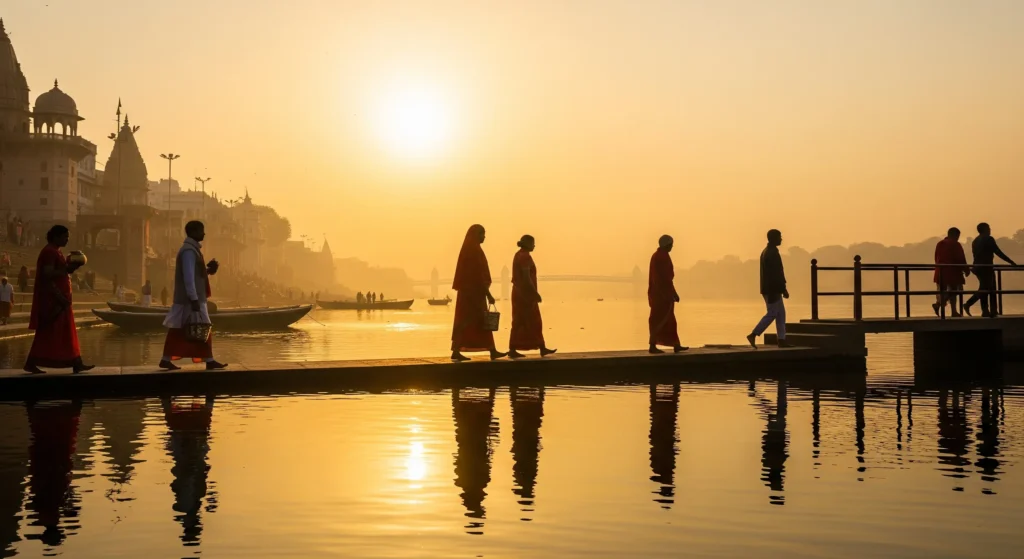
The ritual ends but people don’t rush out. There’s a collective exhale. A moment of stillness.
Then, slowly, the crowd rises. Legs numb. Hearts full.
You collect your things from the locker. Your phone has 47 messages from people who couldn’t understand why you weren’t responding.
You step outside. The sun is rising over Ujjain. The Shipra River in the distance catches the first light.
You’re exhausted. Spiritually saturated. Changed in ways you can’t quite articulate yet.
Chapter 5: What They Don’t Tell You (The Unwritten Rules)
The Bathroom Situation
Let’s talk about the thing everyone worries about but nobody mentions: you’re sitting for 2-3 hours. What if nature calls?
Reality check: Bathrooms are available outside the sanctum, but once you’re inside and seated, leaving means you won’t get back in. The security is one-way.
Solutions that work:
- Don’t drink more than 3-4 sips of water after 11 PM the night before
- Use the bathroom at your hotel before leaving
- There are facilities near the locker area—use them before entering
- Inside the sanctum, you’re so focused that your body kind of… forgets. (This sounds absurd but it’s true.)
Women-specific concern: Periods. The temple has no official restriction, but traditionally many women choose not to attend during menstruation. This is a personal choice. If you do choose to attend, carry minimal supplies as you can’t take bags inside.
The Elderly and Disabled Reality
My father is 68 with knee problems. He wanted to attend Bhasma Aarti last year.
The truth: It’s physically demanding.
- Sitting cross-legged on marble for 90+ minutes
- Minimal back support
- Lots of stairs depending on your mandapam
- Crowds can be overwhelming
What the temple offers:
- Wheelchairs available at entrance (first come, first served)
- Priority entry lane for senior citizens (but you still sit on the floor)
- Volunteers who help
What the temple doesn’t offer:
- Chairs or stools inside sanctum
- Elevator access
- Private viewing area
My advice: If your elderly relative has mobility issues but is determined to attend, book Kartikey Hall (closest to entrance), arrive extra early to avoid crowd stress, and bring a folding cushion (small ones are allowed).
The Children Question
Parents always ask: “Should we bring our 8-year-old?”
Official rule: Children under 10 cannot enter the inner sanctum for Bhasma Aarti. No exceptions.
What I’ve observed: Parents try anyway. They get stopped at security. Drama ensues. Children cry. Everyone’s day is ruined.
Alternative: The temple has a family viewing area where under-10s can watch on screens. It’s not the same, but it’s something.
My opinion as an uncle: Wait until they’re teenagers. Bhasma Aarti at 4 AM is overwhelming for adults. For children, it’s often just confusing and uncomfortable. Let them experience regular darshan first, build understanding, then bring them to Bhasma Aarti when they can appreciate it.
The Weather Nobody Warns You About
January-February (Peak Season):
- Temperature at 4 AM: 8-12°C
- Feels like: 5°C (marble floor, open courtyards)
- You’ll be shivering in just dhoti/saree
- Solution: Thermal inners, thick shawl, hot tea before entering
March-May (Summer):
- Temperature at 4 AM: 22-28°C
- Feels like: Comfortable, but by 5:30 AM you’re sweating
- Solution: Light cotton dhoti/saree, small towel to wipe sweat
June-September (Monsoon):
- Temperature at 4 AM: 20-24°C
- But it’s humid and might be raining
- Challenge: Wet marble floors are slippery
- Solution: Walk carefully, keep extra clothes in locker
October-November (Best Time):
- Temperature at 4 AM: 15-18°C
- Feels like: Perfect
- This is when I recommend people visit
The Food Timing Strategy
The night before:
- Dinner by 8 PM (light, no heavy masala)
- No dairy after 9 PM (trust me on this)
- Herbal tea or warm water at 10 PM
- Nothing after midnight except small sips of water
Why? Because sitting cross-legged with a full stomach is miserable. Also, the sanctum gets warm with body heat, and indigestion happens.
After the aarti:
- You’ll be STARVING
- Ujjain’s breakfast scene opens by 6:30 AM
- Head to Gopal Mandir area for hot poha, jalebi, and chai
- My recommendation: Vijay Poha Center (est. 1972, locals’ favorite)
The Emotional Preparation Nobody Talks About
Here’s something I learned after my 15th or 16th Bhasma Aarti: you need emotional preparation, not just logistical preparation.
You might cry. I’ve seen tough-looking men sob. Corporate executives break down. It’s not about being “spiritual” or “religious”—it’s about the atmosphere, the ancient ritual, the connection to something larger than yourself.
You might feel nothing. And that’s okay too. Some visits hit different than others. First time I went, I was overwhelmed. Third time, I was distracted thinking about work. Seventh time, I had a profound spiritual experience. It varies.
You might be disappointed. If you’re expecting a “wow” moment like in movies, you might not get it. The power of Bhasma Aarti is subtle. It seeps in slowly.
My suggestion: Go without expectations. Just be present.
Chapter 6: The Mistakes I’ve Made (So You Don’t Have To)
Mistake #1: Taking My Phone to the Locker Area
First time I attended, I thought “locker area” meant “you can have your phone until right before entering.”
Wrong.
The locker area is BEFORE security. You hand over your phone, THEN you go through security, THEN you enter.
I spent 20 minutes arguing with security, missed the beginning of the aarti, and learned a lesson: follow instructions exactly as given, not as you interpret them.
Mistake #2: Wearing a New Dhoti Without Practice
My brother-in-law from Mumbai attended for the first time. Bought a beautiful silk dhoti. Never wore one before in his life.
Result? It came loose during the aarti. Not completely, but enough that he spent the entire ritual holding it with one hand instead of focusing on the ceremony.
Lesson: Wear your dhoti at the hotel. Walk around. Sit down. Stand up. Make sure it’s secure. Use safety pins. This is not the time for traditional “no pins” authenticity.
Mistake #3: Booking the Wrong Date
This sounds impossible, but I did it. Confused March 15 with March 16 in the official temple booking portal (mahakaleshwar.nic.in). Realized my error at 2:30 AM when the security guard checked my confirmation.
“Sir, this is for tomorrow,” he said.
Lesson: After booking, immediately add the date to your phone calendar. Double-check the SMS. Triple-check the printed confirmation.
Mistake #4: Ignoring My Body’s Limits
I’m 34, reasonably fit. But sitting cross-legged on marble for 2 hours with minimal movement? My legs went numb around the 70-minute mark.
I tried to stand up at the end. My legs gave out. I literally stumbled, grabbing the shoulder of the person next to me for support.
Lesson: Do some basic stretching before going. Yoga poses like Sukhasana (easy pose) for 10-15 minutes daily in the week before helps significantly.
Mistake #5: Bringing My Grandfather Without Proper Assessment
This one I regret. My grandfather insisted he was fine. He’s 82 but proud. I believed him.
Reality: He struggled with the stairs. The crowd stressed him. The floor hurt his knees. He didn’t complain (because he’s from that generation), but I could see his discomfort.
We left halfway through. He never got to complete the aarti experience he’d dreamed of.
Lesson: Love sometimes means saying “this might not be suitable” even when they insist otherwise. For elderly relatives, consult a doctor first, consider their actual mobility, and maybe opt for regular darshan instead.
Mistake #6: Following “Viral” Advice from Instagram
Saw a reel that said “reach by 3:30 AM to avoid crowds.”
Reached at 3:30 AM. The crowd was already massive. Because everyone had seen the same reel.
Lesson: Viral tips become useless when everyone follows them. Stick to official timings and guidelines.
Chapter 7: Beyond Bhasma Aarti—Experiencing Ujjain Properly
The Day Before: Setting Context
Most people fly into Indore, reach Ujjain, and immediately rush to book darshan. Wrong approach.
What I tell visitors: Arrive a day early. Experience Ujjain first.
Day 1 Suggested Itinerary:
8:00 AM – Land in Indore, drive to Ujjain (55 km, 1.5 hours)
10:00 AM – Check into hotel, freshen up
11:30 AM – Visit Mahakaleshwar for regular darshan (NOT Bhasma Aarti yet)
- This familiarizes you with the temple layout
- You’ll know where everything is for the 2 AM visit
- You’ll feel the energy and understand what you’re preparing for
1:30 PM – Lunch at local restaurant (try traditional thali)
3:00 PM – Visit Harsiddhi Temple (5-minute walk from Mahakal)
- One of 51 Shakti Peeths
- Beautiful evening aarti at 6 PM
- Helps you understand Ujjain’s spiritual ecosystem
5:00 PM – Visit Kal Bhairav Temple
- Unique: deity is offered liquor by devotees
- Fascinating intersection of Tantric traditions
- 15-minute walk from Mahakal
6:30 PM – Ram Ghat evening aarti
- Sit by Shipra River
- Watch the traditional aarti with hundreds of lamps
- This is Ujjain’s soul—peaceful, spiritual, timeless
8:00 PM – Dinner, return to hotel
9:00 PM – Prepare clothes and documents for tomorrow
10:00 PM – Sleep
Why this matters: When you attend Bhasma Aarti, you’re not just a tourist checking off a bucket list. You’re someone who understands the context, respects the tradition, and has felt Ujjain’s spiritual pulse.
The Day After: Processing the Experience
7:00 AM – After Bhasma Aarti, return to hotel
8:00 AM – Breakfast (you’ve earned it)
9:00 AM – Sleep (seriously, you need this)
12:00 PM – If you have energy, visit:
- Sandipani Ashram (where Krishna studied as a child)
- Ved Shala (ancient astronomical observatory)
- Chintaman Ganesh Temple
2:00 PM – Lunch
3:00 PM – Shopping:
- Rudraksha beads at Gopal Mandir market
- Traditional Ujjaini pottery
- Religious books and literature
- Bhasma packets (consecrated ash—yes, you can buy it)
Evening – Quiet reflection time
My personal post-Bhasma ritual: I sit at Ram Ghat around sunset, watch the river, and just… process. The experience is intense. You need time to absorb it.
Other Sacred Sites Worth Your Time
Mangalnath Temple:
- Believed to be the birthplace of Mars (Mangal)
- Sits on a hill with stunning city views
- Important for astrological remedies
- Personal note: The sunrise from here is magnificent
Gopal Mandir:
- Krishna temple in heart of city
- Maratha architecture, silver doors
- Active, vibrant, less intense than Mahakal
- Why I love it: It’s joyful. After Mahakal’s intensity, Gopal Mandir feels like a celebration.
Siddhavat:
- Ancient banyan tree on Shipra banks
- Sacred for performing ancestral rites
- Quiet, meditative atmosphere
- Local secret: Best visited early morning or late evening, avoid afternoon crowds
The Ujjain Nobody Talks About
Charming narrow lanes near the old city smell of incense and frying samosas. Elderly women sell fresh flowers for temple offerings from dawn to dusk. Small tea stalls where locals debate philosophy and cricket with equal passion. The Shipra River that’s been bathing pilgrims for 3,000 years.
This is the Ujjain that tourists miss but locals live.
If you have time, walk. Don’t rush from temple to temple in an auto. Walk through Freeganj market. Stop at random sweet shops. Talk to shopkeepers.
Last year, I spent 30 minutes talking to a 75-year-old bangle seller near Ram Ghat. She’s been there for 50 years. She told me stories about when Ujjain was much smaller, when Mahakaleshwar didn’t have online booking, when pilgrims would camp along the river for weeks.
Those conversations are the real Ujjain.
Chapter 8: The Spiritual Side (For the Curious and Skeptical)
Why Bhasma? The Philosophy Behind Ash
I’m not a religious scholar, but growing up in Ujjain, you absorb things.
Bhasma (sacred ash) isn’t just symbolic. In Shaivism, it represents the ultimate truth: everything returns to ash.
Your body? Ash eventually. Your possessions? Will burn to ash. Your ego, your achievements, your worries? All ash.
Lord Shiva smeared in ash is a constant reminder: nothing is permanent except consciousness itself.
When you watch Bhasma being applied to the Jyotirlinga at 4 AM, you’re watching an ancient meditation on impermanence performed through ritual.
It’s not morbid. It’s liberating.
My friend Amit, a software engineer and self-proclaimed atheist, attended last year because his mother insisted. He later told me:
“I didn’t expect to feel anything. But watching that ash ritual… I don’t know, man. I’ve been stressed about a startup failing. Worried about money, status, what people think. And at 4:30 AM, watching a 2,000-year-old ritual about the meaninglessness of it all… something clicked. My problems felt smaller. Not unimportant, just… smaller.”
That’s the power of Bhasma Aarti. It recalibrates perspective.
The Dakshinmukhi Mystery
Mahakaleshwar is the only Dakshinmukhi (south-facing) Jyotirlinga among all twelve.
What does this mean?
In Hindu cosmology:
- North represents preservation (Vishnu)
- East represents creation (Brahma)
- West represents balance
- South represents dissolution/death (Yama, the death god)
Shiva as Mahakal faces south—toward death itself. He’s not just a deity you pray to for blessings. He’s the lord of time (Kaal), the ultimate reality that all must face.
Tantric perspective: South-facing deities are considered more powerful but also more demanding. They don’t just grant wishes. They transform you.
My observation: People come to Mahakal for different reasons. Some want miracles. Some want peace. Some just want to say they’ve been there.
But if you come with openness, Mahakal has a way of showing you what you need to see—not always what you want to see.
Can Non-Hindus Attend?
Official answer: The outer sanctums are open to all. Garbh Griha and Bhasma Aarti have some traditional restrictions, but enforcement varies.
Practical answer: I’ve seen people of all backgrounds attend regular darshan. For Bhasma Aarti, if you have a booking, dress appropriately, and follow rules, generally there’s no issue.
My perspective as a local: Hinduism doesn’t have a monopoly on seeking the divine. If you come with respect and genuine intent, the temple welcomes you.
I once met a Buddhist monk from Thailand at Bhasma Aarti. He told me Shiva as destroyer/regenerator parallels Buddhist concepts of impermanence. He’d traveled to Ujjain specifically for this experience.
Faith is personal. Respect is universal.
Chapter 9: The Scams, the Touts, and Staying Safe
The Three Types of Scammers You’ll Meet
Type 1: The “Temple Helper”
Approaches you near Ram Ghat or Gopal Mandir. Wears orange or white clothes (looks official). Offers to “help with booking” or “guarantee entry” or “take you through VIP gate.”
Reality: No VIP gate exists. No guaranteed entry services exist. He’s either taking your money for fake services or overcharging for legitimate services you can do yourself.
How to identify: Official temple staff never approach you soliciting business. They’re inside the temple, doing their jobs.
What I do: Politely say “Already booked online, thank you” and keep walking.
Type 2: The “Pandit for Special Puja”
Corners you inside temple premises. Says you need special puja for Mahakal’s blessings. Quotes ₹2,000-₹10,000. Creates urgency: “Your horoscope shows problems, must do this puja today.”
Reality: All temple pujas have fixed official rates, displayed on boards. Special pujas exist but are optional and moderately priced.
Red flags:
- Approaches you unsolicited
- Creates fear/urgency
- Won’t tell you the exact puja name
- Wants cash immediately
What I do: “I’ll check with the temple office first” usually makes them disappear.
Type 3: The “Accommodation Agent”
At railway station or bus stand. Has brochures for “best hotels near temple.” Offers to book for you. Takes advance payment. Hotel is either:
- Fully booked when you arrive
- Horrible quality despite promises
- Doesn’t exist
How they operate: Partner hotels pay them commission. They don’t care about your experience, just their cut.
What I do: Book hotels online before arriving. If arriving without booking, go directly to hotel, don’t use agents.
The Women-Specific Safety Concerns
My sister visits Ujjain every year with her friends. Based on their experiences:
Generally Safe: Ujjain is a pilgrimage town. Most locals are respectful. Temple areas have police presence.
Areas to be cautious:
- Walking alone after 9 PM in non-main areas
- Auto-rickshaws with multiple passengers you don’t know
- Isolated ghats after sunset
Recommendations:
- Use hotel-arranged taxis at night
- Keep pepper spray (legal in India)
- Stay in groups during early morning travel to temple
- Trust your instincts—if something feels off, it probably is
Specific to Bhasma Aarti: The 2 AM travel time concerns many women. Honestly, it’s usually fine because hundreds of people are heading to the temple at that hour. You’re never alone on the route. But book a reliable taxi (hotel-arranged or Ola/Uber) rather than random auto.
The Money Safety Tips
ATMs: Use ATMs inside bank branches during day hours, not standalone machines at night.
Carrying Cash: Keep money in multiple places—some in wallet, some in inner pocket, some in hotel safe.
Temple Donations: Official hundis (donation boxes) are inside the temple. Anyone approaching you asking for donations outside is suspicious.
Flower Sellers: They’ll overcharge. Fixed rate should be ₹20-₹50 for standard flower offerings. If someone quotes ₹200, walk away.
Prasad: Official temple prasad is sold at fixed counters at fixed rates. Private sellers outside often sell poor quality at inflated prices.
The “Express Entry” Scam
This deserves special mention because it’s common and convincing.
The pitch: Someone claims they can get you “express entry” or “skip the line” for Bhasma Aarti for ₹5,000-₹10,000. They show you a laminated ID badge that looks official.
The truth: No such service exists. What they’re selling is either:
- Fake entry that gets you stopped at security
- Counter tickets that you could have gotten for ₹100
- Nothing—they take your money and disappear
How to verify: Ask them for temple trust contact number. Real services have official contacts. Scammers make excuses.
My rule: If it sounds too good to be true (skip 2-month waitlists! guaranteed entry!), it is.
Chapter 10: The FAQ I Wish I’d Had
Q1: I missed online booking. Can I still attend Bhasma Aarti?
Short answer: Possibly, but don’t count on it.
Options:
- Try counter booking (arrive by 5:30 AM, day before)
- Check website at 11:55 PM for last-minute cancellations
- Try again for a different date
- Attend regular morning darshan instead (also beautiful, less restrictive)
Reality check: During peak season (October-March), chances of getting counter tickets if you arrive after 7 AM are under 20%.
Q2: What’s the actual cost of attending Bhasma Aarti?
Booking fee: ₹200 (official)
Additional costs:
- Travel to Ujjain: ₹2,000-₹10,000 (depends on your city)
- Accommodation: ₹800-₹3,000 per night
- Food: ₹300-₹500 per day
- Auto-rickshaws: ₹200-₹300 (multiple trips)
- Dhoti/Saree: ₹100-₹500 (if you don’t own one)
- Offerings: ₹50-₹200 (optional)
- Miscellaneous: ₹500
Total realistic budget: ₹4,500-₹15,000 per person (depending on travel distance and choices)
Q3: Can I do Bhasma Aarti and regular Garbh Griha darshan same day?
Technically yes, but impractical.
Bhasma Aarti ends at 6 AM. Garbh Griha darshan for public starts around 6:30 AM but has long queues.
After 2-3 hours in Bhasma Aarti, you’re exhausted. Most people need breakfast and rest.
My advice: Do Bhasma Aarti one day, Garbh Griha darshan another day. Give each experience proper time and attention.
Q4: Is there an age limit?
Official policy:
- Under 10: Not allowed in inner sanctum for Bhasma Aarti
- 10+: Allowed with same dress code as adults
Practical consideration:
- Under 12-13: Will they sit still for 2+ hours? Will the 2 AM wake-up work?
- Teens: Usually fine if they’re interested and prepared
- Elderly: Assess mobility and health honestly
Special case: If elderly person can’t sit cross-legged, they can sit with legs stretched (try to be at edge of your section so you don’t block others’ view).
Q5: What if I have a medical condition?
Diabetes: Carry glucose tablets in small cloth bag. Inform nearby volunteers before aarti starts.
Blood pressure: Take morning medicine before leaving hotel. Keep pills with you (medications are allowed).
Asthma: Inhalers are allowed but must be shown at security.
Claustrophobia: Book Kartikey Hall (more space, less crowded feeling). Sit near the edge if possible.
Knee/back problems: Bring small cushion (allowed) and choose section closest to entry/exit.
Serious conditions: Consult doctor before attending. Temple has basic first aid but no medical facilities inside sanctum.
Q6: What’s the best month to attend?
My ranking:
1. October-November
- Perfect weather (15-20°C at dawn)
- Post-monsoon, city looks beautiful
- Not as crowded as December-January
- Booking easier than peak season
2. February
- Cool mornings but not too cold
- Mahashivratri usually falls in Feb (if you want intense energy)
- Crowds moderate
3. December-January
- Most popular (winter vacation time)
- Cold but manageable with warm clothes
- Booking very competitive
- City most crowded
Avoid if possible:
- April-May: Extremely hot (35-42°C even at dawn)
- June-September: Monsoon—possible rain, slippery floors, humidity
Q7: Can I take my mobile phone?
For the tenth time: NO.
This question is asked so often, I’ll be very clear:
Not allowed:
- Mobile phones
- Cameras
- Smartwatches
- Tablets
- GoPros
- Any recording device
Why the rule exists:
- Maintains sanctity and focus
- Prevents commercialization of sacred ritual
- Reduces distraction for everyone
- Security concerns
What happens if you try to sneak it in: Metal detectors catch it. Security confiscates it. You might be denied entry. Not worth it.
For photos: Take them outside the temple before/after. The external architecture is beautiful and photos are allowed there.
Q8: Is photography allowed anywhere in the temple?
Outer courtyards: Yes, before security check
Temple complex after security: No
During Bhasma Aarti: Absolutely not
Garbh Griha: Never
Ram Ghat and outside areas: Yes
Respect the rule. I’ve seen foreign tourists argue for 15 minutes about this. It doesn’t change the rule. It just annoys everyone.
Q9: Can I bring my elderly parent who uses a walker/wheelchair?
Wheelchairs: Available at temple entrance (limited number). They can use it until the inner sanctum, then must transfer to sitting position.
Walkers: Can’t be taken inside sanctum. Must be left with locker.
Mobility challenge: The real issue is sitting cross-legged on floor for 2 hours. If your parent can’t do this comfortably, consider:
- Regular darshan instead (shorter)
- VIP darshan (faster, less sitting time)
- Watching live darshan on temple website
Don’t force it. I’ve seen elderly people in pain throughout the aarti, too proud to leave early. It’s not worth their discomfort for the sake of “completing” the experience.
Q10: What’s the refund policy if I can’t attend?
Harsh truth: No refunds.
The ₹200 booking fee is non-refundable. If you miss your slot—illness, flight delay, any reason—the booking is forfeited.
What you can do:
- No official transfer mechanism
- Some people try to find someone else to use their booking (same name on ID required—essentially impossible)
- Basically, you lose the booking
Lesson: Only book when you’re absolutely certain of your dates.
Q11: Can I visit during my menstrual period?
Official stance: The temple doesn’t have explicit restrictions.
Traditional practice: Many women choose not to visit during menstruation, following personal/cultural beliefs.
My perspective (as someone who’s asked priests): It’s a personal decision. The temple staff won’t ask. You won’t be checked. It’s between you and your beliefs.
Practical consideration: If you do attend, remember you can’t take bags inside (so carrying pads/tampons for emergencies is difficult). Plan accordingly.
Q12: Is there a dress code for regular darshan (not Bhasma Aarti)?
Less strict but still important:
Men:
- No shorts, no sleeveless shirts
- Jeans/trousers + shirt is fine
- Traditional wear appreciated but not mandatory
Women:
- Modest clothing that covers shoulders and knees
- Dupatta recommended
- Saree not mandatory for regular darshan
- Avoid very tight or revealing clothes
General rule: Dress as you would for any religious place. When in doubt, err on the side of more conservative.
Q13: What should I do if I feel overwhelmed during the aarti?
Physical overwhelm (dizzy, nauseous):
- Raise your hand, signal volunteer
- They’ll help you exit
- Don’t try to push through—you might faint
Emotional overwhelm (crying, panic):
- Normal and common
- If you need to leave, you can
- No one will judge
Sensory overwhelm (noise, crowd, claustrophobia):
- Close your eyes, focus on breathing
- If it’s too much, exit is always possible
- Next time, book Kartikey Hall (more space)
Remember: Your wellbeing is more important than completing a ritual.
Q14: How much should I donate/offer?
Zero is acceptable. Offerings are completely voluntary.
If you want to offer:
- Flowers: ₹10-₹50
- Prasad: ₹21-₹101 (auspicious amounts)
- General donation: ₹51, ₹101, ₹501 (whatever you feel)
Don’t feel pressured. Volunteers walking with baskets are offering you an option, not demanding payment.
Where offerings go: Official hundis support temple maintenance, free services, and charitable activities.
Q15: What happens if I break a rule unknowingly?
Small infractions (talking too loud, adjusting your phone):
- Volunteers will politely correct you
- No big deal
Major violations (trying to use phone, refusing dress code):
- You’ll be asked to leave
- Security will escort you out
- No refund
Honest mistakes:
- If you genuinely didn’t know, explain politely
- Temple staff are generally understanding
- But “I didn’t know” doesn’t work for well-publicized rules like dress code
My advice: Read all the rules before you go. Print them if needed. “I didn’t know” is preventable.
Final Thoughts: What Bhasma Aarti Taught Me
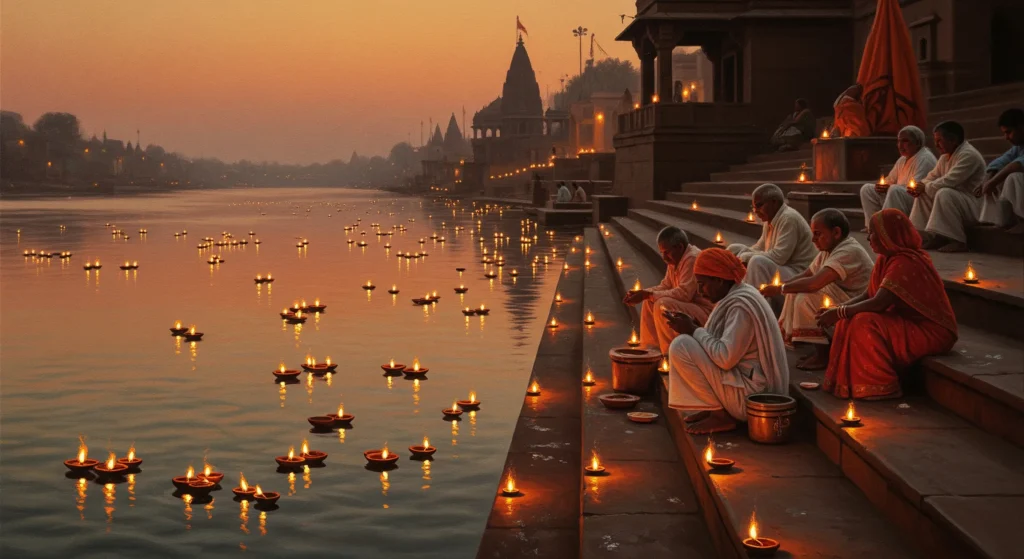
I’m writing this at Ram Ghat at 7:30 PM. The evening aarti just finished. Lamps are flickering on the Shipra. Families are taking selfies. The air smells like incense and fried samosas.
Ten years ago, when I first attended Bhasma Aarti (family obligation, not personal interest), I thought it was just an elaborate ritual. Cultural heritage. Something to tell people I’d experienced.
I didn’t expect it to mean anything to me personally.
But somewhere between the 47th visit and writing this guide, Bhasma Aarti became my anchor. Not religiously—I’m not suddenly more devout. But philosophically.
Every time I watch ash being applied to that ancient lingam, I remember: all this—the stress about career, the anxiety about future, the obsession with what people think—it all ends as ash.
Not in a depressing way. In a liberating way.
What remains? The present moment. The connections we make. The love we share. The consciousness experiencing it all.
That’s what Mahakal teaches, if you’re listening.
So when you go—when you sit on that cold marble at 4 AM, surrounded by strangers who are also seeking something—let the ritual wash over you.
Don’t worry about perfect photos (you can’t take them anyway). Don’t stress about understanding every Sanskrit word (you won’t). Don’t focus on “having a spiritual experience” (that’s not how it works).
Just be there. Fully present. Open.
Let Mahakal do the rest.
About the Author:
Kshitij Kumawat was born in Ujjain and has lived here for 34 years. When he’s not helping confused tourists find their way around the temple complex, he works as a content writer and runs a small bookshop in Freeganj that specializes in Hindu philosophy texts. He’s attended Bhasma Aarti forty-seven times and counting, each visit teaching him something new about faith, tradition, and the beautiful chaos of being human.
Contact: For genuine questions about visiting Ujjain (no booking services, no paid consultancy), you can find him most evenings at Ram Ghat or leave a message at Kumawat Book House near Gopal Mandir.
Disclaimer: This article represents personal experiences and observations. Official rules and procedures are subject to change. Always verify current information with the official Mahakaleshwar Temple website (shrimahakaleshwar.com) before planning your visit. The author has no commercial affiliations with hotels, tour operators, or booking services mentioned.
Frequently Asked Questions about Bhasma Aarti
10 verified answers compiled by Kshitij Kumawat from the official Shri Mahakaleshwar Temple Trust portal at mahakaleshwar.nic.in. Last updated 2026-05-07. We do not facilitate bookings.
How do I book Bhasma Aarti on the official temple site?
Visit mahakaleshwar.nic.in, log in, click the relevant Bhasma Aarti option from the menu, choose date and devotee details, and pay with UPI or card. We do not handle Bhasma Aarti bookings.
What is the 2026 ticket price for Bhasma Aarti?
Bhasma Aarti pricing is set by the Shri Mahakaleshwar Temple Trust. Free general access, paid passes 250 to 3,000 rupees, Garbh Grah 750 rupees. Verify on mahakaleshwar.nic.in before payment.
How early should I reach the temple for Bhasma Aarti?
For 4 AM Bhasma Aarti reach Gate 4 by 3 AM. For daytime VIP or general darshan reach 30 to 60 minutes before your slot. For festival days connected to Bhasma Aarti add 90 minutes buffer.
What is the dress code when attending Bhasma Aarti?
Men: dhoti or full pants with shirt. Women: saree or salwar suit with full sleeves and dupatta. No jeans, shorts, sleeveless or Western wear. Bhasma Aarti follows the standard Bhasma Aarti dress code.
Are there scams I should watch for around Bhasma Aarti?
Yes. Touts at Gate 1 sell fake passes for 1,000-5,000 rupees. WhatsApp groups promise guaranteed slots. Hotel concierges add 2,000 rupee markups. Pay only on mahakaleshwar.nic.in.
Can I bring my mobile phone during Bhasma Aarti?
Mobile phones are deposited at security locker before entering the sanctum or Bhasma Aarti hall. The corridor outside permits photos. Bhasma Aarti inside the inner sanctum is no-phone.
Can children attend Bhasma Aarti?
Children under 5 enter free with adult. Above 5 need their own pass at the same price. Bhasma Aarti suits kids who can sit quietly. Bring water and snacks for early morning slots.
What documents are required for Bhasma Aarti?
Original Aadhaar or PAN of every devotee. The QR ticket PDF (printed or on phone). Photocopies and digital images of ID are rejected. Bhasma Aarti verification happens at the gate.
Is photography allowed during Bhasma Aarti?
Photography is prohibited inside the sanctum and Bhasma Aarti hall. The Mahakal Lok corridor and outside gate areas allow photos. Bhasma Aarti ritual photography requires written permission.
Are refunds available for Bhasma Aarti cancellations?
No refunds. Bookings can be rescheduled to a future date by contacting the temple office at least 48 hours before. Same-day no-shows lose the pass.

About this site
Independent informational guide for Mahakal Bhasma Aarti at Mahakaleshwar Temple, Ujjain. Verified weekly against the official portal mahakaleshwar.nic.in. We do not facilitate bookings.
Bhasma Aarti
Mahakal Darshan
Plan your trip

Kshitij Kumawat
Built this site to protect devotees from scams. 30+ Bhasma Aarti visits since 2018.